
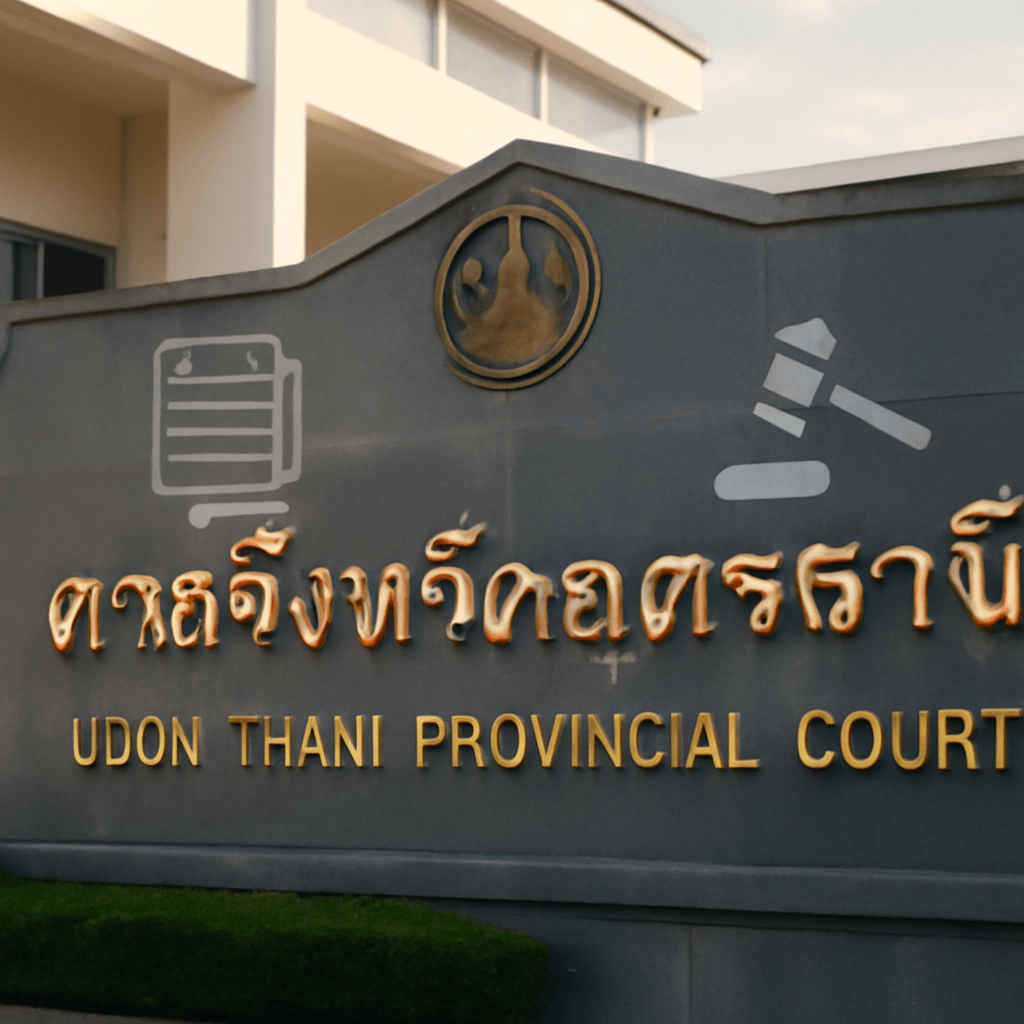
A Thai will with no executor is not a dead letter. It’s an unfinished instruction—clear in parts, silent on the one role that makes the instructions move. When that happens in Udon Thani, the court can appoint an administrator to step into the gap, collect assets, pay debts, and carry out lawful distributions. The core questions then come fast: who applies, what does the petition look like, how do translations and foreign records fit, and what actually changes if there’s no will at all.
This guide stays practical. It favors clarity over myth and cautions you where the facts or the office rules can shift. If you’re an heir, a surviving spouse, or a foreign family juggling documents from three countries, read slowly—then get advice before you file.
Quick Answer

When a Thai Will Has No Executor: What It Means in Udon Thani
The will may still be valid. The Udon Thani court can appoint an administrator to act in place of a named executor.
Thai law separates two issues that people often blend together. One: is the will valid? Two: who is authorized to carry it out? When a will is valid but names no executor—or the named person has died, refuses, or is unfit—the court can appoint an administrator of the estate to do the executor’s job. Functionally similar role; different route to authority.
In Udon Thani, the application is filed at a court of first instance with jurisdiction over the deceased’s domicile or where assets sit. The court reviews the will’s existence and scope, hears from an eligible applicant, and—if appropriate—issues an order appointing an administrator with powers to gather assets, settle lawful debts, and distribute according to the will or, if there’s no valid distribution clause, according to intestate rules.
One caution that trips families: a bank, a land office, or a registrar won’t hand over assets or change records just because the heirs agree. Without a court order (or other authority recognized by law), custodians of assets often will not act. The appointment order is the key that turns the lock.
Requirements and documentary detail can vary by district office, by the assets involved, and by whether foreign records are part of the file. If your facts are cross-border, build extra time for translations and authentication, or consider counsel with local filing experience.
Who Can Apply to Be Court-Appointed Administrator in Thailand?
Typically an heir, a legatee under the will, or another interested person may petition. The court decides appointment based on law, evidence, and suitability.
When there’s no executor named, the law doesn’t leave the estate adrift. Someone steps up. Common applicants include:
- Statutory heirs (such as a surviving spouse or children), where the will is partial or unclear.
- Legatees named in the will—people or institutions that stand to receive bequests.
- Creditors or other interested parties, if no heir or legatee applies and the estate needs management to prevent loss.
The court looks for a candidate with a legitimate stake and the capacity to do the work properly. If multiple applicants file, the court may appoint one, appoint more than one, or—if circumstances justify it—decline to appoint a proposed person and select another suitable administrator. Prior conflicts of interest, practical ability to manage Thai assets, and demonstrated cooperation with other heirs can influence the decision.
Foreign nationals can, in many cases, serve as administrators in Thailand. Practical constraints still matter: translation burdens, local banking and tax steps, and the ability to attend hearings or to appoint counsel. In cross-border estates, courts and clerks often scrutinize foreign documents; that’s not bias, it’s risk control.
Where the will is silent on distribution or invalid on certain clauses, Thai intestate succession rules can fill the gap. The Thai Civil and Commercial Code sets out the order of statutory heirs, including spouse and certain relatives. Shares and priorities are law-driven; they do not bend to private side agreements unless those agreements comply with Thai law.
Udon Thani Court Process: Step-by-Step Petition for Appointment
File the petition, support it with evidence, attend the hearing, and—if granted—use the court order to administer the estate.
Exact procedures can vary by court, but the core rhythm is steady. If you’re in Udon Thani, expect these core moves:
- Collect the foundation records. Death certificate, proof of the deceased’s domicile or connection to Udon Thani, the original or a reliable copy of the will, identification of the applicant, and preliminary asset/debt information.
- Prepare the petition. The petition asks the court to appoint an administrator because no executor is named (or cannot act). It identifies interested parties and explains the estate’s contours in plain terms. If documents are foreign, add certified Thai translations; legalization or apostille may be necessary depending on origin and office practice.
- File with the court. Filing can be on paper through the clerk. In some cases, e-filing may be available to registered counsel under the Court of Justice system, subject to its rules and technical access.
- Notice and hearing. The court will set a hearing date. It may require notice to interested persons, and in specific situations, it may direct additional publication or evidence. Bring the will, the death certificate, and witnesses familiar with the will’s execution if authenticity needs proving. Details depend on the facts.
- Appointment order. If satisfied, the court issues an order appointing the administrator. That order becomes your instrument to deal with banks, the land office, and other custodians. Keep certified copies.
- Administration duties. The administrator gathers assets, pays lawful debts and taxes, and distributes remaining property according to the valid will or, where needed, the intestate rules. Inventory and accounting practices are not optional; they protect the administrator and the estate.
Timelines depend on the court’s schedule, completeness of filings, complexity of assets, and translation/legalization workload. A lightly documented local estate moves faster than a transnational file with multiple beneficiaries, property classes, and contested facts.
Practical tip: consider an initial consult with a local team before you lock in translations or notarizations. The right scope, once, saves you a second round of paperwork.
Court of Justice e-Filing guide and the Court of Justice public handbook on estate administration can help you understand the system’s contours, but your facts will still drive what the clerk and judge require.
Documents and Translations: A Focused Checklist
Expect identity, death, will, heir, and asset papers. Foreign records often need certified Thai translations and, in some cases, legalization.
Documents shape outcomes. Missing or mistranslated records slow everything down. Use this focused checklist as a starting point, then confirm details with counsel—requirements can vary by district office and by the court’s direction in your case:
- Death certificate (Thai DOPA record or foreign certificate with certified Thai translation; foreign documents may require legalization).
- Household registration extract or evidence of last domicile in Thailand, where available.
- The will (original if possible). If only a copy exists, be ready to explain and to provide witness or notarial evidence of execution.
- Applicant’s identification (Thai ID or passport) and address.
- Heir and legatee information (names, relationships, contact details). Family registration extracts may be needed; if foreign, translate and, where required, legalize.
- Marriage record or divorce record for the deceased, if relevant to marital property or heir status. Foreign-language or foreign-issued records often need translation or legalization depending on intended use.
- Preliminary asset list (land titles, bank account statements, vehicle registrations, share certificates). Copies are fine for filing; originals may be inspected when transferring.
- Debt information (known creditors, tax matters, obligations).
If the deceased executed the will abroad or left assets overseas, coordinate translations in both directions. Thai courts rely on Thai-language filings; foreign banks rely on local languages. Spend once, precisely.
Helpful general information for records management appears in the DOPA’s family registration and wills FAQ materials. See the DOPA FAQ guide for orientation; always verify the current version and local office practices.
Intestate Succession vs. Will Without Executor: How Distribution Happens
If there’s no will, Thai intestate succession rules control. If there’s a will but no executor, the court-appointed administrator distributes according to the valid will; intestacy fills only the gaps.
Two different problems, two different legal engines:
| Scenario | Who manages the estate | Distribution rule | Notes |
|---|---|---|---|
| No will at all (Udon Thani inheritance without will) | Court-appointed administrator | Thai intestate succession (statutory heirs in a set order) | Heir classes and shares come from law. Private deals that bypass lawful heirs expose the administrator to claims. |
| Will exists, no executor named | Court-appointed administrator | The valid terms of the will; intestacy only for any property not effectively disposed of | The administrator’s duty is fidelity to the will and to the law, not to any single beneficiary’s preference. |
| Executor named but refuses/cannot act | Court-appointed administrator (replacement) | Same as above: follow the will; use intestacy for undisposed property | Evidence that the named executor cannot act should accompany the petition. |
Families sometimes assume that a will “giving everything to my spouse” settles the estate without a court step. Banks, land offices, and registrars often require a court appointment because they need certainty: the right person, with a lawful order, making binding decisions. That conservative posture protects estates from unauthorized withdrawals and disputed transfers.
Foreign Families, Joint Accounts, and Marital Property: Issues That Complicate Things
Cross-border documents, joint ownership questions, and marital property rules often turn a simple petition into a detailed one.
International families meet extra friction. A few pressure points to anticipate:
- Translations and legalization. Birth, marriage, and death records issued abroad may need certified Thai translations and legalization or apostille, depending on origin and how the court or district office applies its rules to your filing.
- Marital property. What counts as estate property can depend on the marital regime and whether a valid divorce changed the picture. If a divorce by mutual consent is part of the history, remember the basics under Thai law: it must be in writing, properly signed, and witnessed as required; and it becomes effective only when properly registered if that is the applicable legal step at the district office. Agreements should clearly address property, debts, children, custody, visitation, and support where relevant. If the spouses could not agree, court proceedings might be required instead of administrative registration. Proof of any such divorce or court order can be vital in the probate file.
- Joint accounts and survivorship expectations. Not every joint bank account passes automatically to the survivor under Thai law or bank policy; some require estate processing. Get the bank’s written position and align it with the court order to avoid reversals later.
- Immovable property. Land and condominium record changes typically require a clear chain: court appointment, tax clearances where applicable, and formal transfer steps at the land office. Keep expectations realistic; appointments don’t teleport titles.
One more reality check: coordination between the court and registration offices is procedural, not personal. If a document is incomplete or phrased ambiguously, expect a request for clarification or a refusal until corrected. That’s not obstruction; it’s compliance at work.
Risks, Disputes, and How a Local Lawyer Helps
The biggest risks are procedural missteps, missing heirs, and asset transfers made too early. Local counsel reduces those risks and keeps the file moving.
Probate risk is boring—until it isn’t. Three patterns recur:
- Filing gaps. Petitions that omit a known heir or skip a translation invite objections or a second hearing. When evidence is uneven, the court slows down rather than gamble on a flawed appointment.
- Premature distributions. Moving assets before an appointment or before lawful debts are cleared can backfire. Administrators who distribute too soon risk personal liability.
- Disputes over standing. Multiple applicants, conflicts among heirs, or contested wills shift a routine appointment into litigation posture. Preparation and neutral communication matter.
A local team balances precision with pace. Expect help scoping translations, organizing the evidence, and aligning the petition with what Udon Thani courts actually accept. If you’re weighing the role yourself, read the reality check here: 5 Hidden Risks of Being an Executor in Udon Thani. If you’re ready to move, start gathering papers with this Thai Will Executor Checklist. And if you want a primer on the role itself, we keep it straightforward here: Executor of Will Udon Thani.
Caution: Requirements can vary by district office and by individual facts. Where foreign-language or foreign-issued documents are involved, translation and legalization expectations differ by office and by the document’s intended use. Get current advice before you file.
Did You Know? (Legal & Data Insight)
Did you know? Nationally, there was only 1 case filed involving a request to lift account seizure, highlighting the relative priority of legal issues across the country.
Source: Ministry of Justice Thailand, Open Data (MOJ)
Need Legal Assistance?
If your documents require translation, certification, or you are unsure which district office to choose in Bangkok, contact our legal team immediately. We will review your case, confirm local requirements, and help you register your marriage without delay.