
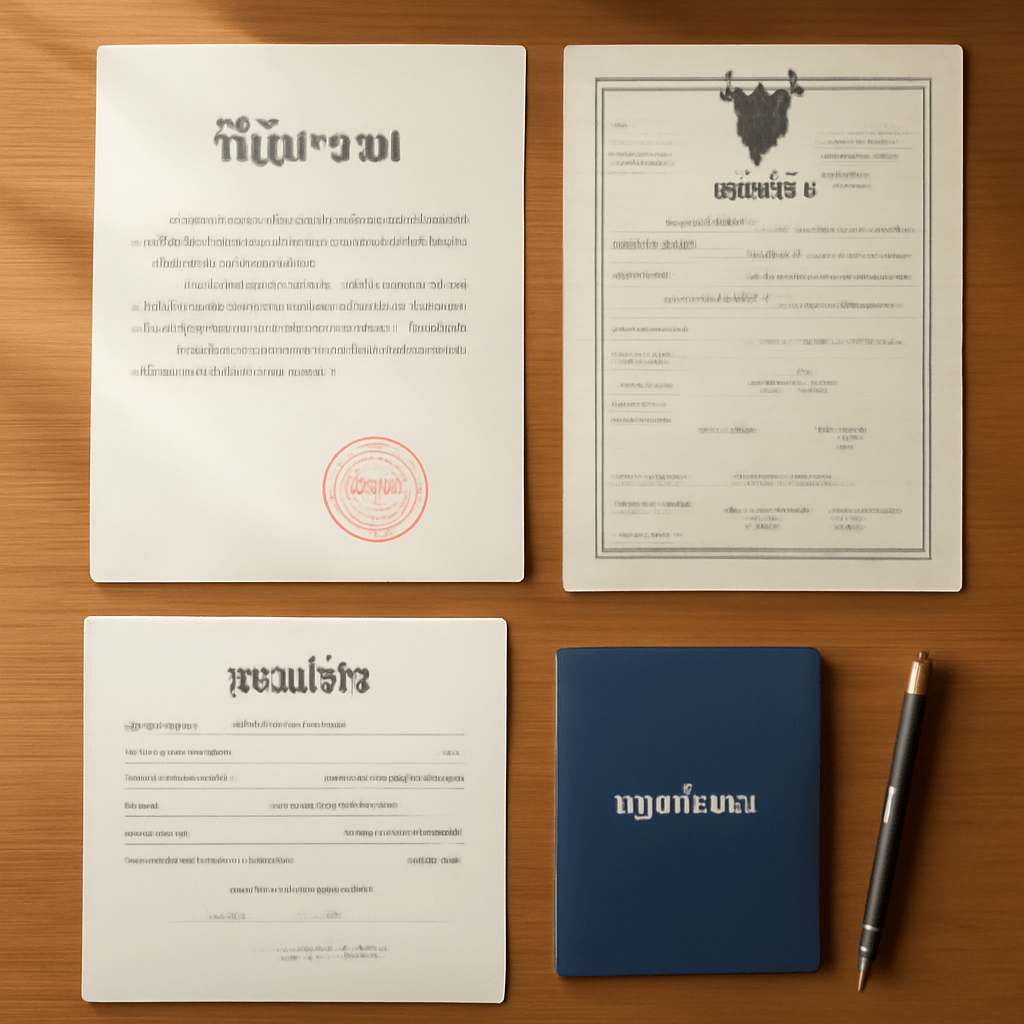
When a family member passes in Udon Thani, the paper chase starts fast: death records, the will, lists of heirs, bank books, land titles. Some documents are obvious. Some are not. And the court won’t appoint you as the estate administrator (often called the “executor” in English) unless your filing is complete enough to be credible. This guide lays out a Thai will executor checklist tailored to Udon Thani families—what to compile, where the bottlenecks hide, and how to move from shock to lawful control of the estate without guesswork.
Quick Answer

Executor or Estate Administrator in Thailand—what it actually means
Thailand uses court‑appointed estate administrators; “executor” is the common English label. Your authority begins only after the court order.
In Thai practice, there isn’t a free‑standing power to act just because the will names you. The court must appoint an estate administrator (often called an executor in English). Only then can you collect assets, deal with banks, or sign transfer documents at a land office. If the deceased lived in Udon Thani or significant assets are here, the competent court is typically within the province—but jurisdiction depends on domicile and asset location, so confirm before filing.
If a will names you, that nomination guides the court. If there’s no nomination—or no will—the court may appoint a suitable person after hearing from interested parties. Either way, expect to show the court that you’re organized, neutral, and ready to protect the estate.
For hands‑on support with filings and hearings, see our local overview: Executor of Will Udon Thani.
The Thai Will Executor Checklist for Udon Thani Families
Gather identity, status, heirs, and asset proofs. Originals where possible; certified copies and translations where needed.
Courts value complete, legible, and properly translated papers. The list below captures what Udon Thani families commonly compile. Precise requirements can vary by court and district office, and judges may ask for supplemental proofs based on the facts.
- Original will and any codicils (Thai or foreign). If the will is in English or another language, prepare a Thai translation by a qualified translator; legalization may be required depending on the filing court and the document’s origin.
- Death certificate (Thai DOPA issuance if death occurred in Thailand; foreign death certificates typically need translation and, where applicable, legalization).
- Deceased’s identification: Thai ID card copy, Tabien Baan (household registration), passport if foreign.
- Marital status documents: Thai marriage certificate; divorce certificate or court judgment if divorced; spouse’s death certificate if widowed. These documents shape marital property questions.
- Executor’s identification: ID/passport and address; if you live abroad, a notarized copy may be requested.
- Heir information: names, relationships, addresses, ID/passport copies. Where heirs are minors, note guardianship details.
- Asset proofs: land title deeds (Chanote) and recent property tax receipts; condo unit ownership and juristic person letters; bank passbooks/statements; life insurance policy statements; vehicle registration book; company documents (affidavit, shareholder list); any loan or mortgage agreements.
- Liabilities: known debts, tax notices, secured obligations, and any pending litigation.
- Notices and consents (if available): acknowledgments from heirs, creditor correspondence, or affidavits. Not always required, but helpful.
- Power of Attorney if a lawyer will file the petition and appear for you; some courts want a Thai form with proper witnessing/consular legalization if signed abroad.
Keep an index page on top. Label bundles: Will, Identity, Heirs, Assets, Debts, Translations, POAs. Simple, visible order earns trust.
| Asset Type | Typical Proofs | Udon Thani Note |
|---|---|---|
| Land/House | Chanote, structures permit/house book, tax receipts | Transfers are handled post‑appointment at the competent land office; procedures can vary. |
| Condo | Unit title, juristic person letter re. fees | Management office letters often requested before transfer. |
| Bank Accounts | Passbooks, statements, bank letters | Each bank applies its own release protocols post‑order. |
| Vehicles | Blue book, insurance, lien info | Post‑order transfer at Department of Land Transport. |
| Company Shares | Company affidavit, shareholder list, AoA | Share transfer must align with company registry records. |
Need a professional once‑over before you file? We review and assemble Udon Thani inheritance documents to fit local practice—without overpromising outcomes.
From first paperwork to court appointment: a grounded sequence
Collect, translate, inventory, file the petition, attend hearing, receive the order, then administer and distribute.
- Secure the will and vital records. Photograph, then lock down originals. If only a copy of the will exists, keep it; the court may still proceed depending on evidence.
- Stabilize assets. Notify banks of death to freeze unauthorized withdrawals; list property; document ongoing costs. Do not distribute anything yet.
- Translate and legalize foreign documents as needed. If the deceased or heirs have non‑Thai documents, obtain Thai translations. Some filings require notarization or legalization; check early because lead times vary.
- Prepare the petition for appointment. Your filing typically states the death, the will (or intestacy), heirs, assets, and why you should be appointed. Attach your document bundle and any witness statements required on the facts.
- File with the competent court. Availability of e‑filing and precise formats can vary. The Court of Justice has electronic filing resources, but use is subject to matter type and court practice. See the COJ guide: e‑Filing guide for estate petitions.
- Attend the hearing. Be ready to confirm identity, the will, relationships, and a basic asset list. Heirs may be heard or notified depending on the case.
- Receive the appointment order. With the order in hand, open an estate account if appropriate, collect assets, and obtain letters/confirmations from institutions as they request.
- Administer and distribute. Pay valid estate debts and expenses, then perform distributions according to the will and Thai law. Keep receipts and a simple ledger.
Timing depends on the district office for records, the completeness of your file, translation/legalization delays, court scheduling, and whether any heir objects.
Foreign papers, translations, and legalization—what trips people up
Expect to translate non‑Thai documents; legalization or notarization may be required depending on origin and intended use.
Cross‑border estates introduce friction. A British death certificate, a U.S. divorce decree, a French company share certificate—each may need a Thai translation and, depending on origin, an apostille/notarial act and Thai Ministry of Foreign Affairs legalization. Thai courts and district offices protect their records; they will not accept unclear or unverified papers.
- Translations: Use translators experienced with Thai court filings. Keep names, dates, and transliterations consistent across documents.
- Legalization: If a document is issued overseas, confirm whether the Thai embassy/consulate or the Ministry of Foreign Affairs must legalize it for court or DOPA use. Practices can vary by office.
- Notarization vs. certification: Some filings accept certified copies. Others want notarized originals or legalized copies. Clarify early to avoid repeat trips.
For civil registration records and FAQs from the Department of Provincial Administration, see DOPA’s guidance: Family registration and wills FAQs. Requirements can change or be applied differently by district offices—confirm what your specific office wants before you queue.
Banks, land, vehicles, and companies: document pointers that matter in Udon Thani
Each asset type asks for different proofs. Align court orders with institution checklists.
Institutions follow internal checklists. Your court appointment establishes authority, but banks and government offices still require their own forms. Here’s how to think about common categories without assuming a one‑size‑fits‑all rule.
- Bank accounts and investment platforms
- Expect to show the court order, your ID, death certificate, and institution‑specific forms. Joint accounts and nominee designations complicate timing and access.
- Ask the branch for its updated list; practices can differ by bank and branch.
- Land and houses
- Bring the court appointment order, Chanote, house book, and your ID to the competent land office when you’re ready to transfer. Mortgages or usufructs require extra steps.
- Estate debts come first. Do not transfer real property to heirs until you’ve addressed valid liabilities.
- Condominiums
- Condo juristic persons often request a balance letter confirming common fee status before transfer. Obtain it early.
- Vehicles
- Transfer is through the Department of Land Transport; bring the appointment order, blue book, and any lien release. Insurance updates follow.
- Thai companies
- Share changes should reflect the company affidavit and shareholder list on file. Check the articles for transfer mechanics. Board resolutions may be needed to register changes after estate distribution.
If paperwork is thin—no bank book, lost Chanote—your petition and follow‑on applications can still proceed with alternative proofs, but expect extra scrutiny.
No executor named or the will is silent? Still workable.
The court can appoint an appropriate administrator even without a named executor.
If the will does not name an executor, or there is no will at all, the estate does not stall forever. A relative or interested party can petition for appointment as administrator. The court will consider relationships, suitability, and any objections from heirs.
Walk through the local decision points here: What Happens If There Is No Executor Named in a Thai Will? Udon Thani Court Process. For a wider legal frame—forced heirship, marital property, and debt priorities—see Thai Inheritance Law: What Executors Must Know.
Bottom line: someone still needs court authority. Do not distribute assets informally because it feels practical. That creates future title problems.
Pitfalls to avoid—and a reality check on timing
Missing translations, unclear heir maps, and hurried filings cause delays. Build a clean record first.
- Skipping translations/legalization: If a document isn’t in Thai and the court requires a Thai version, your petition may pause. Translate, then legalize as directed for the jurisdiction of issue.
- Unclear family status: The court wants a coherent story—spouse, ex‑spouse, children. Gather marriage/divorce certificates and birth records before you file.
- Asset blind spots: Overlooked bank accounts or land plots surface late and force supplemental filings. Compile a preliminary inventory from mail, emails, and tax records.
- Distributing too early: Don’t hand over cars or withdraw funds before appointment and proper accounting. Reversing informal transfers is messy.
- Overpromising to heirs: Thai law, not family expectations, controls distribution. Promise only what the will and the law permit.
Family‑status caution that affects estates
If the deceased was divorced by mutual consent, Thai law expects that divorce agreement to be in writing, properly signed and witnessed, and—where administrative registration is the applicable step—the divorce becomes effective only when properly registered. Good agreements usually address property and debts as well as children, custody, visitation, and support where relevant. If spouses cannot agree, court proceedings may be required instead of administrative registration. Why this matters for executors: marital status and any property division impact who inherits and what counts as estate property.
How long will it all take? That depends on the district office’s speed in issuing records, the completeness of your documents, translation/legalization timelines, whether any papers come from overseas, and court scheduling. Some estates move quickly; contested matters and cross‑border proofs take longer.
Thai vs. common‑law expectations—don’t mix the systems
Thai courts appoint administrators; bank letters and land transfers follow the court’s order, not the will alone.
Executors from common‑law countries often assume the will itself confers immediate powers. In Thailand, your authority flows from the court’s appointment order. Translate your habits accordingly.
| Topic | Common‑law Expectation | Thai Practice |
|---|---|---|
| Authority to act | Executor acts from date of death per will | Authority begins with court appointment order |
| Probate label | Probate grant/letters testamentary | Appointment of estate administrator |
| Bank access | Bank may act on will and death cert | Banks typically require court order and forms |
| Property transfer | Executor’s deed with probate grant | Land/vehicle transfer only post‑order at Thai offices |
If your estate has cross‑border elements, align both systems deliberately. When in doubt, sequence Thai requirements first so local institutions can act.
Did You Know? (Legal & Data Insight)
Did you know? Nationally, only 1 individual has filed a request to reduce monthly penalty fees, highlighting the relative priority of legal issues across the country.
Source: Ministry of Justice Thailand, Open Data (MOJ)
Need Legal Assistance?
If your documents require translation, certification, or you are unsure which district office to choose in Bangkok, contact our legal team immediately. We will review your case, confirm local requirements, and help you register your marriage without delay.