
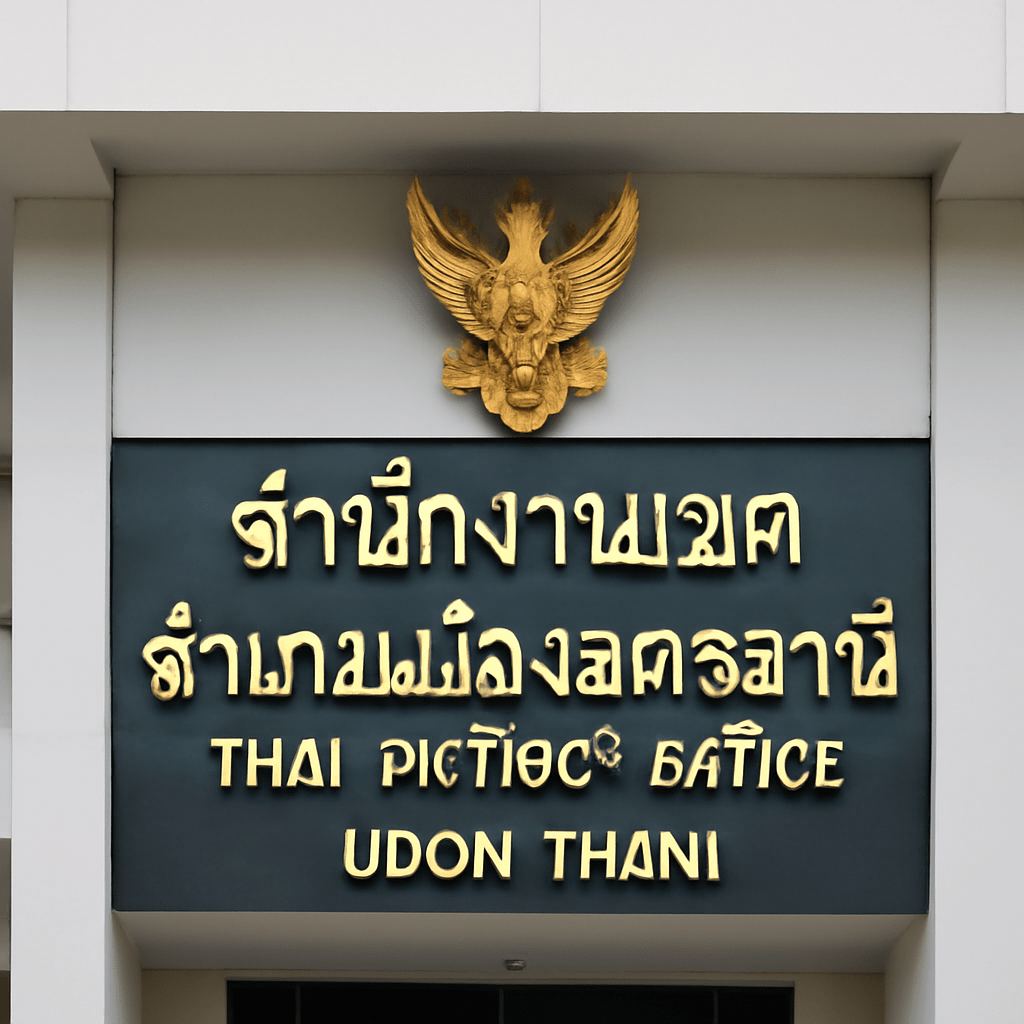
When a marriage ends, the law does not rush; it requires steps. In Udon Thani, you generally have two tracks: register a mutual-consent divorce at a district office (amphur), or file a court case if you cannot agree. The first is administrative, document-driven, and often faster; the second is litigation, evidence-heavy, and slower by nature. Either way, precision matters—what you sign today will follow you in tomorrow’s visa renewals, property transfers, and your children’s paperwork. This guide maps the terrain without guesswork, so you can move with purpose and avoid preventable errors.
Quick Answer

Two Paths to Divorce in Udon Thani: Administrative Registration vs Court Litigation
In Udon Thani, you either register a mutual-consent divorce at a district office (amphur) or you file a contested divorce in court if agreement is impossible or legal grounds must be proven.
Every divorce in Udon Thani starts with one decision point: do you both agree on everything—ending the marriage, the property split, debts, and arrangements for children? If yes, the administrative track at the district office (amphur) can work. If not, the court track is the lane you must take.
| Feature | Administrative (Amphur) | Court Litigation |
|---|---|---|
| When available | Only when both spouses fully agree and can attend to register | When there is no agreement or grounds must be proved |
| Legal form | Mutual-consent divorce in writing; signed by both spouses and witnesses; registered | Petition filed; evidence and hearings; court judgment |
| Outcome document | Divorce registration and certificate issued by the registrar | Court judgment; then civil records updated at the district office |
| Timeframe | Varies by office and document readiness | Varies by court schedule, complexity, and evidence |
| Foreign issues | Translations/legalization may be needed for foreign documents or later overseas use | Service of process, translations, and recognition issues can add steps |
Legal basics that do not bend: a divorce by mutual consent must be in writing; it must be signed and witnessed as required by Thai law; and for the administrative route, the divorce becomes effective only when it is properly registered with the district registrar. If you cannot agree on the essential terms, expect to move through court.
Caution: procedures and document lists can differ by district office and by your personal facts. Confirm with the office before you take time off work or travel.
Can You Register a Divorce at the Amphur in Udon Thani?
Yes—if both spouses consent, appear, and present acceptable documents, the amphur can register a mutual-consent divorce. If consent is missing or documents are not acceptable, the registrar cannot complete it.
In Thailand, an administrative divorce is not a conversation; it is a written act that must be registered. In practice, this route is available when:
- Both spouses fully agree to end the marriage and to all terms relating to children, property, and debts.
- The agreement is put in writing, signed by both spouses and witnesses as required by law, and presented to the registrar.
- The registrar is satisfied with the identities, marital record, and supporting documents.
Document expectations vary. Common categories include identity documents, house registration book extracts (for Thai nationals), the original Thai marriage certificate or record, and any prior court orders affecting parental power or property, if relevant. For foreign spouses or foreign-issued documents, acceptable Thai translations and, in some cases, legalization or certification may be requested by the office. Practices differ, so call ahead.
Two recurrent realities worth stating plainly:
- Both spouses typically must attend in person to express consent to the registrar.
- If the marriage was celebrated abroad and never recorded in Thailand, some offices may not register the divorce administratively until the foreign marriage is recorded first—or a court judgment is obtained. This is fact-dependent.
If your facts don’t fit the administrative box, that is not a dead end. It’s a sign the court route is likely required.
Step-by-Step: How to File for Divorce in Udon Thani by Mutual Consent
Prepare a complete, bilingual agreement, confirm the district office’s document list, handle translations/legalizations, attend together, sign before the registrar with witnesses, and collect the divorce record and certificates.
Here is a practical sequence. Short, deliberate, and built to prevent avoidable backtracking:
- Confirm eligibility and venue. Call the Udon Thani district office (amphur) you plan to visit. Ask what documents they require for your situation (Thai–Thai, Thai–foreign, marriage registered in Thailand or abroad, children involved, prior court orders). Requirements can vary by office.
- Draft the divorce agreement. Put all terms in writing—marriage dissolution, property and debt division, parental power and custody, visitation schedules, child support, and any spousal maintenance if agreed. The agreement must be signed by both spouses and witnesses as required by Thai law. A bilingual Thai–English version is usually pragmatic when a foreign spouse is involved.
- Gather documents. Expect to present identification, your marriage record, and documents relevant to children and property. Do not assume a one-size-fits-all list—bring originals where possible and copies as advised by the office.
- Translations and legalization. Foreign-language documents may need certified Thai translations. Depending on the document, the registrar may ask for legalization or confirmation from relevant authorities. If you need to use the Thai divorce record abroad later, plan for translation and legalization steps after registration.
- Attend together at the amphur. Both spouses generally appear in person. The registrar will review documents and the written agreement; signatures are taken in the registrar’s presence with witnesses. If the registrar asks for corrections or additional documents, address them methodically—rushing leads to mistakes.
- Registration and records. When the registrar accepts the filing, the divorce is registered. You may receive a divorce certificate or record, and personal records are updated. Keep multiple certified copies; future immigration, banking, and property matters often ask for them.
Checklist—what your agreement should not omit:
- Children: parental power, where the child lives, visitation specifics (days, holidays, handovers), school decisions, passport consent rules, and child support amounts and payment method.
- Property and debts: who keeps which assets; how to transfer titles; who pays which debts; timelines for transfers; handling of bank accounts, vehicles, and any real estate.
- Enforcement clauses: practical provisions on late payments, document cooperation, and where disputes will be resolved.
Need a second set of eyes on the agreement language? Our Divorce Lawyer Udon Thani team reviews and drafts bilingual terms designed for registration and future proofing.
When Agreement Breaks Down: Court Divorce in Udon Thani
If there is no full agreement, or evidence must be presented on legal grounds, the divorce proceeds in court. After judgment becomes final, you update the civil record at the district office.
Some marriages do not end by signing at a counter—they end in a courtroom. A contested divorce in Udon Thani involves filing a petition, serving the other party, and proving legal grounds under the Thai Civil and Commercial Code. The court may refer parties to mediation; if settlement fails, the case proceeds to evidence and a judgment.
Points that matter operationally:
- Grounds and proof: The court requires legally recognized grounds and admissible evidence. Do not rely on general grievances—facts and documents carry the day.
- Children: The court can determine parental power, living arrangements, visitation, and child support where parents cannot agree. Orders are based on the child’s welfare and the evidence presented.
- Property and debts: The court allocates marital property and liabilities according to Thai law and the facts proved.
- Post-judgment steps: After the judgment becomes final, you bring the judgment and required documentation to the district office to update the civil register and obtain appropriate certificates for administrative use.
Timeframes depend on the court’s schedule, the complexity of the case, and whether settlement is reached early. Foreign elements—service abroad, translation, or the need for foreign evidence—can extend timelines. If your case has cross-border issues, read our guidance on Divorce for Foreigners in Udon Thani and seek counsel before filing.
Children, Property, and Money: Drafting Terms That Hold Up
Spell out parental power, residence, visitation, support, property division, and debts in clear, enforceable language. Ambiguity today invites conflict tomorrow.
Vague promises unravel under stress. A sound divorce agreement does the opposite—it anticipates friction and removes it with clarity.
- Parental power and residence: State who holds parental power, where the child will live, and who makes which decisions. If joint parental power is intended, define decision-making and tie-break mechanisms.
- Visitation plan: List days, times, holidays, school breaks, and transport handovers. Include notice rules for swaps and what happens if someone is late.
- Child support: Amount, payment date, bank details, annual review mechanism (if any), and how extra-school or medical costs are shared.
- Spousal maintenance (if any): Only include what you both genuinely accept. If none, say none.
- Property: Identify assets clearly—addresses, plate numbers, bank accounts, shares—and the deadline and method for each transfer.
- Debts: Specify who remains responsible for each loan or card, how to remove the other spouse’s liability (refinance, closure), and what happens if a lender will not cooperate.
- Documents and cooperation: Timelines for signing transfer forms, providing copies, and attending appointments.
Draft bilingually where a foreign spouse is involved, with Thai controlling for registration but an aligned English version to avoid future misunderstanding. If you end up in court, the judge will value precision over poetry—so write like a registrar will read it.
Foreign Spouse or Foreign Documents? Translation, Legalization, and Recognition
Expect Thai translations and, in some cases, legalization for foreign documents. If you need to use a Thai divorce abroad, plan post-registration translation and legalization steps with the Ministry of Foreign Affairs.
International facts add procedural layers. Not impossible—just layered.
- Translations: Foreign-language documents usually need Thai translations acceptable to the registrar. Quality matters; errors stall registrations.
- Legalization: Depending on the document, the registrar may ask for legalization or confirmation. For using Thai divorce records overseas, you will generally arrange certified translations and legalization via the Ministry of Foreign Affairs (Department of Consular Affairs). See the MFA legalization services page for process information.
- Name and record consistency: Differences in spelling or name order between passports, marriage records, and translations often trigger questions. Align them in advance.
- Marriages celebrated abroad: Where a marriage was never recorded in Thailand, some district offices may not register an administrative divorce until the marriage is first recorded—or a court judgment is obtained. This point is fact-sensitive; confirm with the office handling your matter.
If you’ll rely on the Thai divorce for immigration, banking, or remarriage abroad, plan the legalization chain early. It saves you repeat trips; it also saves you time when an embassy requests certified copies.
Practical Tips, Local Cautions, and How Our Lawyers Help
Call the amphur before you go, bring more documentation than you think you need, and write terms that a registrar can register and a court can enforce. We help you do that without drama.
A few hard-earned tips to keep the process orderly:
- Call first, move second: Document lists and appointment policies can vary by district office. Confirm what your office requires before you take time off or travel.
- Overprepare: Bring originals and copies where available. If a translation might be questioned, bring the translator’s certification and contact details.
- Keep the agreement practical: Registrars look for clarity and completeness, not rhetoric. Terms about children, property, and debts should be specific and implementable.
- Avoid last-minute drafting at the counter: Errors multiply under pressure. Draft and review in advance; if bilingual, align both versions carefully.
- Expect variation, not exception: Timelines depend on the office, staff workload, translations, and whether foreign documents need checks.
Want to go deeper on pitfalls? Read Common Mistakes to Avoid When Filing for Divorce in Udon Thani. If your divorce has cross-border issues, start with our Divorce for Foreigners in Udon Thani guide. For tailored help, our Divorce Lawyer Udon Thani team drafts agreements, coordinates with the amphur, and manages court filings when consensus is out of reach.
Short legal caution: Requirements can vary by district office and your individual facts. Do not rely on a generic checklist where children, property, or foreign documents are involved. Get specific advice before you sign.
Did You Know? (Legal & Data Insight)
Did you know? Nationally, there was only 1 case filed under the category of joint land ownership, highlighting the relative priority of legal issues across the country.
Source: Ministry of Justice Thailand, Open Data (MOJ)
Need Legal Assistance?
If your documents require translation, certification, or you are unsure which district office to choose in Bangkok, contact our legal team immediately. We will review your case, confirm local requirements, and help you register your marriage without delay.