
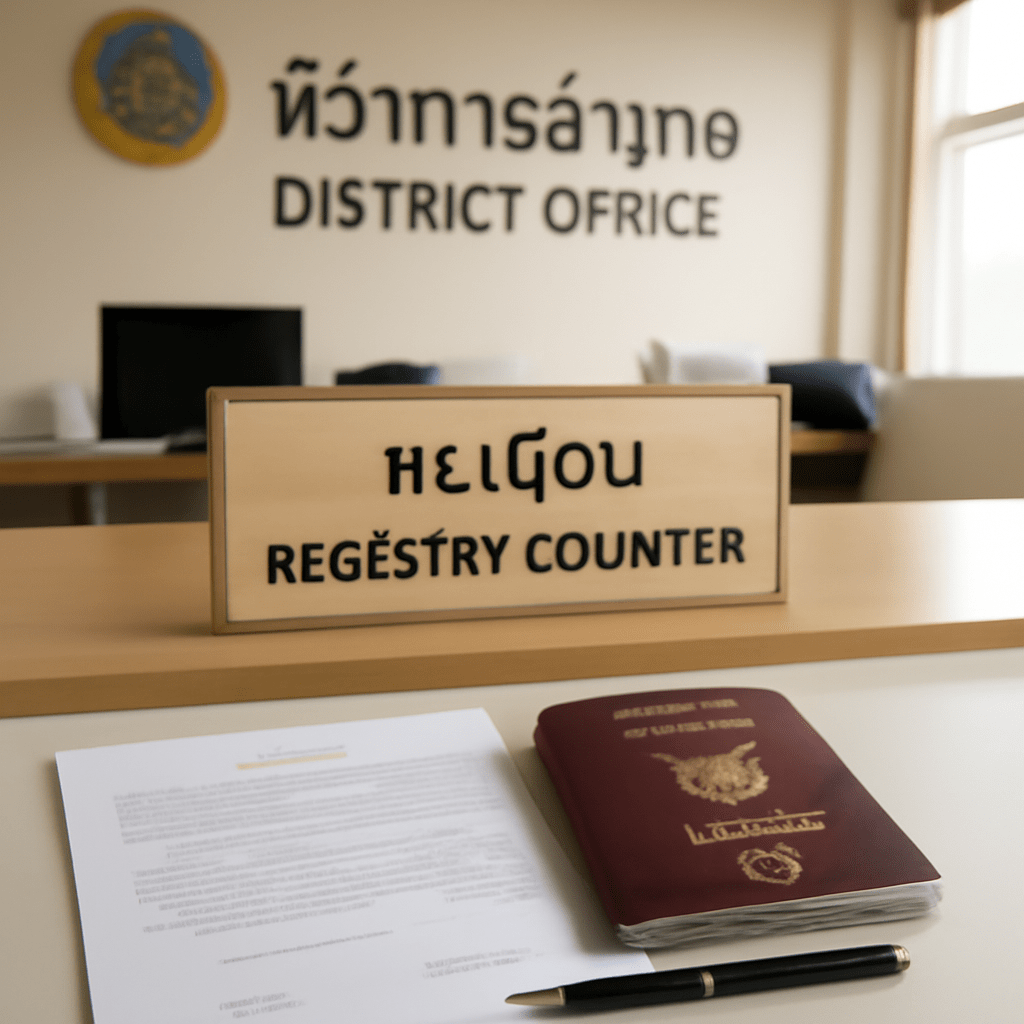
You came to Udon Thani for life, not paperwork. Yet here you are—foreign spouse, an expat, a parent maybe—staring at the hard edge of divorce. Thailand offers two tracks: an administrative path for couples who agree, and a court route when they don’t. Straight talk follows. We’ll keep you out of guesswork, show where the law is clear, and flag the places it isn’t.
Quick Answer

Who can divorce in Udon Thani, and how jurisdiction really works
Foreigners may pursue divorce in Udon Thani if the marriage is recognized under Thai law and the proper forum is available—district office for a mutual-consent registration or a competent Thai court for contested cases.
Start with scope. Thailand recognizes divorce either by mutual consent (administrative registration) or by judgment of a Thai court (litigated divorce). Foreigners can use these paths if the marriage is recognized in Thailand. If the marriage was registered in Thailand, the administrative route is typically available when both spouses agree. If the marriage was celebrated abroad, you may still be able to register a mutual-consent divorce in Thailand—once the foreign marriage is properly recognized in the Thai system—but document and legalization steps can be the difference between a smooth day and a brick wall.
Jurisdiction is not guesswork; it is practical. The district office (amphur) handles only mutual-consent divorces and can proceed when both spouses appear, produce acceptable identification, and present a valid written divorce agreement signed and witnessed as Thai law requires. If there is no agreement about divorcing or about property, debt, or children, court proceedings are generally required instead. Which Thai court can hear your case depends on multiple factors—residence, place of marriage, location of assets—and should be assessed case by case.
Legal caution: Document requirements and processing practices can vary by district office and by fact pattern. Timing depends on the office, completeness of your file, translations, and whether foreign documents need legalization.
Two tracks: administrative mutual-consent divorce vs. court litigation
If both spouses agree, you can register a mutual-consent divorce at a district office; if you do not agree, you must go to court. The administrative route is paperwork-heavy but faster; the court route is rights-driven and slower.
Administrative (mutual-consent) divorce. This is not just a handshake. Under Thai law, a divorce by mutual consent must be in writing, signed by both spouses, and witnessed as required. Crucially, it becomes effective only when properly registered in the official register at the district office. The divorce agreement should address all key points: division of property, allocation of debts, parental power and custody, visitation plans, child support, and any agreed spousal support. If the agreement is incomplete or vague, you invite problems later.
Court (contested) divorce. When agreement is impossible—or a spouse simply refuses to appear at the district office—you pivot to litigation. The court will consider evidence and legal defenses, decide on grounds for divorce, and issue orders about parental power, custody, visitation, and support. Property and debt division are determined under Thai law, taking into account prenuptial agreements and proof of ownership or contributions. After a final judgment, the divorce still needs to be recorded with the registrar to update civil records.
Want a deeper walk-through of both tracks? See our practical guide: How to File for Divorce in Udon Thani.
Documents, translations, and legalization for foreign spouses
Expect to show valid ID, marriage evidence, and a written agreement; foreign-language or foreign-issued documents may need certified translation and legalization depending on the office and intended use.
Documents make or break the day. District offices usually request identity documents (e.g., passports for foreigners; Thai ID and house registration for a Thai spouse), the marriage certificate and any registration record, and a clear divorce agreement in Thai. If your marriage certificate or prior legal records are in another language, the registrar may ask for Thai translations by a recognized translator and proof of authenticity. If a document was issued overseas, legalization steps may apply.
- Translation. Accurate Thai translations help the registrar and avoid ambiguity. Poor translations derail consent.
- Legalization. Depending on the document and office, you may need to legalize foreign documents through the Ministry of Foreign Affairs (Department of Consular Affairs) for use in Thailand. See the MFA’s legalization services for official guidance.
- Embassy certification. Some papers may first require certification or notarization by your embassy or home authorities before MFA legalization. Requirements vary by country and document type.
- Language at the counter. If you are not comfortable in Thai, bring an interpreter or retain counsel who can translate documents and explain each signature line. Do not sign what you do not fully understand.
Legal caution: Document requests and formats can differ among district offices in Udon Thani. Call ahead or have counsel confirm the checklist. Timing depends on translation accuracy and legalization status.
Official resources: The Department of Provincial Administration (DOPA) publishes family registration materials and Q&A that outline registrar functions and documentation expectations. See the DOPA family registration guide and the DOPA divorce registration Q&A handbook.
Property, debts, and prenuptials: put the economics in writing
Thailand separates personal property from marital property; the divorce agreement should deal with both property and debts, guided by any valid prenuptial and credible evidence.
Money talk is not optional. Thai law distinguishes personal property from marital property, though the exact classification can turn on timing, source of funds, and any valid prenuptial agreement. Assets acquired during marriage are commonly treated as marital property, but exceptions matter. The same goes for liabilities—marital debts versus personal debts. Vague settlement language invites future litigation.
- Agreement essentials. In a mutual-consent divorce, your written agreement should address: bank accounts, vehicles, real estate interests, company shares, pensions, insurance values, and debts (credit lines, loans, tax liabilities). Name accounts precisely. Assign responsibility clearly.
- Land and foreign ownership limits. Foreigners face restrictions on land ownership in Thailand. Where land is involved, the structure of ownership and any financing history should be reviewed carefully before you sign.
- Prenuptial agreements. Only prenuptial agreements that meet Thai formalities will control division outcomes. If valid, incorporate the prenuptial’s rules into your divorce agreement to avoid inconsistency.
- Evidence first. Keep statements, title documents, and transfer records ready. In contested cases, the court will rely on evidence rather than assumptions.
If you need a budget reality check for settlement versus litigation, read: Divorce Costs in Udon Thani.
Children: parental power, custody, visitation, and support
Thai law centers on the child’s best interests; your agreement or court orders should address parental power, custody, visitation, support, and practical travel rules.
Children change the tone—rightly. Whether by agreement or court order, decisions must serve the child’s best interests. A solid plan identifies legal parental power, day-to-day custody, visitation schedules (including school holidays), and financial support. Keep it concrete.
- Parental power and custody. Spell out who holds parental power, where the child lives, and how major decisions (education, health) will be made.
- Visitation and travel. Cross-border realities require clarity. Write in procedures for travel consent letters, passport renewals, and notification timelines for trips.
- Child support. Support depends on needs and means; there is no universal number. Courts look for fairness and feasibility. Agreements should be specific about amount, payment dates, and method.
- Language and schooling. In bicultural families, bilingual education and cultural access matter. Name responsibilities and logistics rather than leaving them to goodwill.
Where agreement fails, a Thai court can decide parental power, custody, visitation, and support. Enforcement abroad can be complex and treaty-dependent; plan internationally if one parent resides outside Thailand.
A practical checklist: how to prepare and what to expect at the district office
Prepare identification, marriage evidence, a Thai-language divorce agreement covering property, debts, and children, and ensure required witnesses. Timeframes vary; some cases resolve quickly when documents are complete.
For a mutual-consent divorce in Udon Thani, preparation beats improvisation. Use this field-tested sequence and adapt to the registrar’s instructions.
- Confirm eligibility and appointment. Verify that a mutual-consent registration is appropriate for your situation and ask the district office about appointment or walk-in practices.
- Gather IDs and marriage records. Passports for foreigners; Thai ID and house registration for the Thai spouse; marriage certificate and any Thai registration extracts.
- Draft the divorce agreement in Thai. Include property division, debt allocation, parental power/custody, visitation, child support, and any spousal support. Keep it specific. Attach schedules if needed.
- Secure witnesses. Ensure compliance with witness requirements under Thai law. Have witnesses attend with proper ID.
- Translate and legalize (if applicable). Obtain certified Thai translations for foreign documents and complete any necessary legalization with the MFA or your embassy, as the registrar may require.
- Interpretation plan. If you don’t read Thai comfortably, arrange an interpreter or retain counsel to walk you through each signature block.
- Sign and register. Review the final wording in Thai. Sign in the presence of the registrar and witnesses. The divorce becomes effective only upon proper registration in the official register.
- Collect certified copies. Ask for certified copies of the divorce registration/certificate. If you will use the divorce record abroad, arrange translations and any outbound legalization steps.
Important: Requirements can vary by district office and by individual facts. Processing time depends on the office’s workload, completeness of your documents, and whether translations or legalizations need review.
If you prefer structured guidance from start to finish, our detailed walkthrough is here: How to File for Divorce in Udon Thani. For counsel who can attend with you, see: Divorce Lawyer Udon Thani.
Protecting international validity after a Thai divorce
Obtain Thai divorce records, arrange certified translations, and confirm any legalization needed for recognition in your home country or where you reside.
Your life may be mobile; your paperwork must keep up. After an administrative or court divorce in Thailand, you should obtain official divorce records and, where needed, certified translations for use abroad. Many countries will ask for legalization or apostille-type certification processes. Thailand’s Department of Consular Affairs provides legalization services—review requirements and timelines before you leave the province.
- Outbound use. If you need to update immigration, social benefits, or remarriage status abroad, confirm your destination country’s document rules in advance.
- Name change ripple effects. If your surname changes, coordinate passport, visa, work permit, and bank updates methodically to avoid mismatches.
- Keep a compliance file. Retain copies of translations, legalization receipts, and correspondence. Foreign authorities often request repeat verification.
Official link: MFA Legalization Services.
Did You Know? (Legal & Data Insight)
Did you know? Nationally, there were only 2 cases filed related to compensation claims for infringement, highlighting the overall significance of legal issues in the country.
Source: Ministry of Justice Thailand, Open Data (MOJ)
Need Legal Assistance?
If your documents require translation, certification, or you are unsure which district office to choose in Bangkok, contact our legal team immediately. We will review your case, confirm local requirements, and help you register your marriage without delay.