
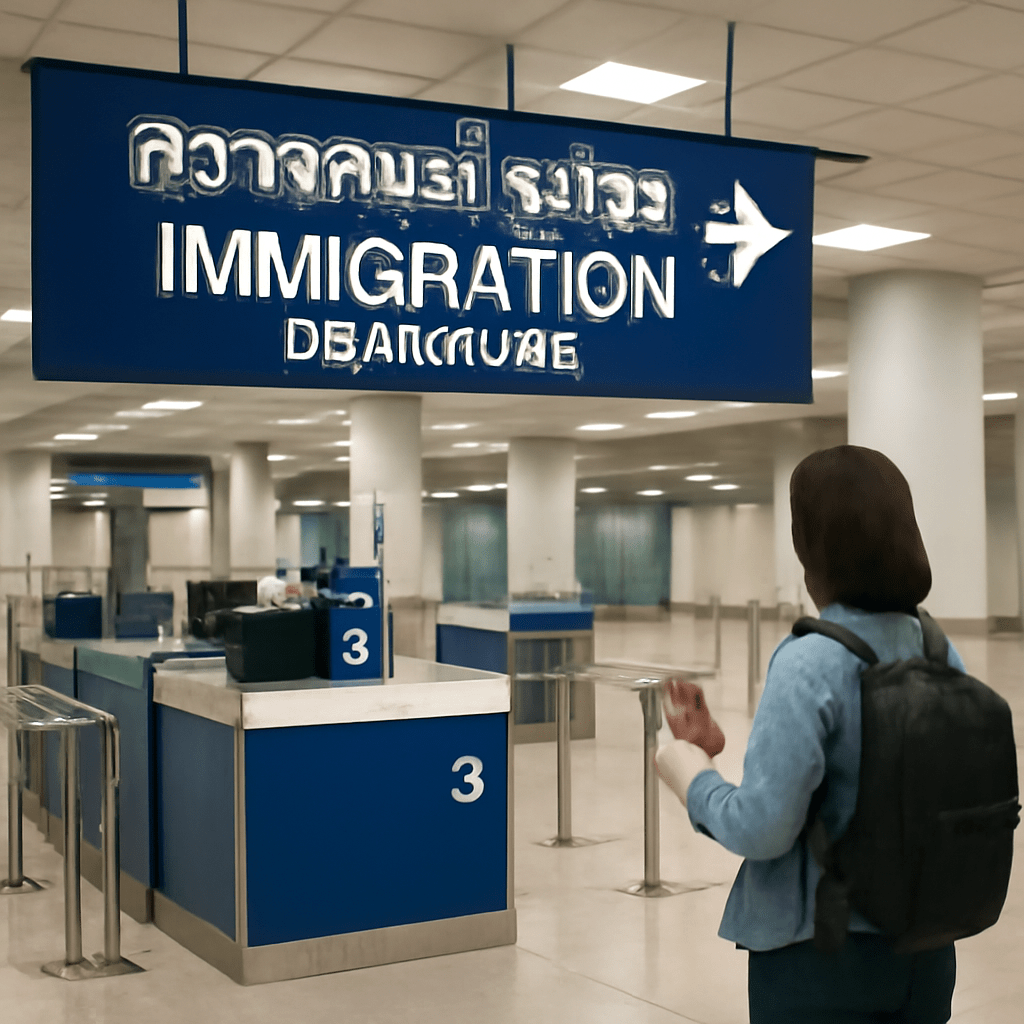
You realized your permission to stay has lapsed—by a day, a week, or more—and now the clock is loud. You want facts, not folklore. Thailand’s overstay rules are formal, documented, and—crucially—applied by officers on published criteria. Consequences depend on your overstay length, whether you surrender or are apprehended, and the paper trail you bring. Some problems resolve neatly at departure. Others do not. If you are in Udon Thani and weighing airport versus local Immigration, this FAQ strips the topic to what matters, points you to official guidance, and shows where careful preparation—tickets, statements, medical notes—actually changes outcomes. Policies evolve, and every case rides on its documents. Treat this as a map, then get individualized advice.
Quick Answer

What counts as overstay in Thailand—and when does the clock start?
Overstay begins when you remain in Thailand beyond the permitted date stamped in your passport or granted by an approved extension. The visa sticker’s validity is not the same as your permission to stay.
Overstay is not a rumor or a gray area. It is a simple condition: you stayed beyond the date authorized in your latest permission-to-stay stamp or extension order. The visa itself—its sticker, its category, its printed validity—does not control the final day you can be in the country. The entry stamp (or extension stamp) does.
The clock starts the day after your permitted date. If your stamp says you may stay until the 12th, the 13th is day one of overstay. Border runs only reset the clock if you are lawfully admitted again and receive a new permission-to-stay stamp. Ninety-day reporting is separate; it does not extend your stay.
If you are uncertain what your current status is—multiple entries, recent extensions, or a lost passport complicating everything—assume nothing. Confirm directly at an Immigration office or with counsel before you move. The official fine process and ban criteria are published by the Immigration Bureau; policies get updated, so always verify the current position against the latest circulars or public service manuals.
Caution: Requirements and available options can vary based on your province office, the completeness of your documents, and whether foreign-language materials need translation or legalization. Do not rely on anecdotes.
Can I leave Thailand with overstay?
Often yes—many travelers settle the fine at departure control and proceed if no other issues exist. But overstay records remain, and longer or aggravated overstays can lead to re-entry bans per Immigration notices.
Short answer: you generally can depart with overstay by paying the applicable fine at the airport before immigration clearance. Land borders also process overstay departures, though local practice and facilities differ. Payment clears the departure event; it does not erase your record.
Two facts matter most: the length of your overstay and whether you are surrendering yourself or were apprehended. Under published notices, longer overstays and arrests can trigger re-entry bans. Officers follow official schedules and internal guidance—not bargaining.
| Scenario | Where you resolve | What typically happens | Risks and notes |
|---|---|---|---|
| Departing via international airport with short overstay | Departure control at the airport | Fine assessed and collected; departure processed if no other issues | Record of overstay is kept; future applications may be scrutinized |
| Significant overstay or complicating factors (arrest, lost passport) | Often handled at local Immigration first | Screening, documentation checks, potential referral to detention if apprehended | Re-entry bans may apply per Immigration notice; timing can vary with caseload and documents |
Planning to depart with overstay? Prepare with discipline:
- Have a confirmed ticket for immediate travel.
- Carry sufficient funds or accepted payment method for the fine (the rate and any cap follow current Immigration rules—verify on the day).
- Bring any evidence explaining the overstay (hospitalization, flight cancellations, force majeure). Originals help; translations may be required depending on the officer and office.
- If your passport was replaced, bring the police report, embassy letter, and old passport copy if available.
If you are in Udon Thani and your facts are not clean—children traveling with one parent, uncertain overstay length, prior overstays—speak with a lawyer and consider presenting to the local office first. Overstay Legal Assistance Udon Thani can help you stage the documents and decide the sequence.
Should I go to Udon Thani Immigration first, or straight to the airport?
If the overstay is short and your departure is straightforward, many travelers clear it at the airport. If anything is complicated—lost documents, medical issues, minors, prior arrests—consult counsel and consider resolving at the Udon Thani office first.
This is the fork in the road. A simple case—few days over, valid passport, same-day flight—often finishes at the airport. A complex case—weeks or months of overstay, missing passport, hospitalization, or previous immigration incidents—deserves a local touch before you move.
At Udon Thani Immigration, officers follow national rules but will apply them to your individual record. Expect identity checks and a review of how you came to overstay. Some situations require you to obtain replacement documents first (police report for lost passport, embassy letter, or temporary travel document). Timelines can vary with the district office, the quality of your paperwork, and whether translations or legalizations are needed.
When in doubt, have a brief consultation. A 20-minute review of your stamps, airline ticket, and hospital papers can prevent a much longer ordeal later. For tailored help, see Overstay Legal Assistance Udon Thani and our primer Thailand Overstay Rules Explained.
Overstay fine waiver Thailand 2025: what is real, what is wishful thinking
There is no standing, general waiver. Limited relief may be considered in documented emergencies or policy-specific announcements. Decisions depend on official guidance and your evidence.
People ask: can the fine be waived in 2025? Here is the sober answer. Thailand does not run an everyday amnesty window. Waivers or special handling have historically appeared only through formal policy announcements (for example, during extraordinary events) or in narrow humanitarian contexts—supported by verifiable documents.
If you believe your facts justify leniency—serious medical treatment, natural disaster, airline collapse—bring the paper trail. Officers may credit well-documented force majeure, but they apply internal rules and circulars; there is no informal negotiating. Prepare:
- Hospital admission/discharge records, dated and on letterhead (Thai or foreign). If in a foreign language, provide a certified translation.
- Police report numbers for accidents, theft, or lost passport incidents.
- Airline or embassy notices showing cancellations, closures, or travel restrictions that blocked departure.
- Proof of funds and an onward ticket to demonstrate your exit plan once cleared.
Every waiver request is evidence-driven and time-sensitive. Policies can change without public fanfare; check current Immigration Bureau communications and get legal advice before you approach the counter. For assembling a credible packet, see How to Explain Emergency Circumstances in a Thailand Overstay Case.
Note: Even when fines are reduced or handled differently due to policy, overstay records can still affect future visas and re-entry. Treat waiver talk as a legal process, not a negotiation tactic.
Re-entry bans after overstay: how Immigration frames the risk
Re-entry bans may apply based on the length of overstay and whether you surrendered or were apprehended. Officers follow published schedules; confirm the current criteria before planning a return.
Thailand’s Immigration Bureau has publicly outlined re-entry consequences for overstay. The structure is consistent: the longer the overstay, the steeper the consequences; surrender is generally treated differently than apprehension. The exact durations and thresholds are set by official notices—do not rely on hearsay. Before you make any new plans, verify the current schedule against the latest Immigration publication.
Why this matters: a ban can nullify your carefully built itinerary, disrupt employment plans, and complicate long-stay categories. Consular officers also weigh your overstay history when you apply for a new visa. Full disclosure is not just ethical; it is expected at many posts. Some visas (for example, certain long-stay types published by the Ministry of Foreign Affairs) have stricter eligibility screens—health insurance, background documents, financials. An overstay record can invite deeper scrutiny, not an automatic denial, but a closer look.
- Check your status against the official re-entry ban notice before booking return travel.
- If you were apprehended rather than self-reporting, seek case-specific advice; the calculus can shift.
- Keep copies of all overstay settlement receipts—the paper trail matters.
For a practical overview, see our guide Thailand Overstay Rules Explained and the Ministry of Foreign Affairs portal for current visa classes and baseline requirements.
Step-by-step: preparing to resolve overstay from Udon Thani
Assemble documents, confirm transport, and map your route—local Immigration first if your case is complex; airport departure control if straightforward.
Order calms problems. Here’s a streamlined sequence that respects how officers actually review files:
- Identify your real overstay length. Read your latest permission-to-stay stamp or extension order; do not confuse it with visa validity.
- Secure your travel plan. If departing now, buy a confirmed ticket. If staying to resolve matters locally, block the day for Immigration and bring a Thai speaker if needed.
- Gather core documents. Passport(s), any police reports, hospital records, airline notices, and proof of funds. If something is in a foreign language, consider a certified translation.
- Decide venue. Straight to airport for clean, short overstay; to Udon Thani Immigration for complex or risky cases. When unsure, consult counsel first.
- Prepare to pay. Overstay fines are calculated under Immigration rules and may be capped—verify the current rate and accepted payment methods.
- Make copies. Photocopy the biodata page, the overstay stamp once issued, and any receipts. Keep digital scans.
- Keep counsel on call. If circumstances change (flight cancellation, officer requests more documents), you want a local number to ring.
Useful to carry:
- A simple cover letter that states your timeline—entry date, permitted-to-stay date, reason for overstay, and your exit plan.
- Contact details for your embassy or consulate.
- Accommodation proof in case you need to return to Immigration the next day.
Caution: Document expectations and timing can vary by district office and the specifics of your case. Foreign-issued or foreign-language documents may require translation or legalization depending on the office and intended use.
If you want a second set of eyes on your packet before you present, our team can review it and rehearse the likely questions. Start here: Overstay Legal Assistance Udon Thani.
A narrow but important aside: divorce, status changes, and overstay risk
If your permission to stay depends on marriage or family status, a change—like divorce—can affect your immigration position. Handle the family law step correctly and update your status promptly.
Overstay sometimes grows out of a different legal issue: a marriage-based permission to stay lapses after the relationship formally ends, or a parent’s status shifts. If this is you, get the family law step right—cleanly, on paper—and then align your immigration record.
Under Thai law, divorce by mutual consent must be in writing, signed and witnessed as required by Thai law, and the divorce becomes effective only when properly registered if that is the applicable legal step for your case. Any agreement should plainly address property, debts, and—where relevant—children, custody, visitation, and support. Foreign-language or foreign-issued documents may require translation or legalization depending on the district office and intended use. If spouses cannot agree, court proceedings may be required instead of administrative registration.
Why mention this in an overstay FAQ? Because Immigration matches your permission-to-stay basis to reality. If you held a marriage-based extension and the marriage ends, you must plan your next status or departure carefully to avoid slipping into overstay. Requirements and timing can vary by district office and your passport country; do not delay. For a deeper primer on the family law step, see Divorce by Mutual Consent in Udon Thani: Requirements, Documents, and Legal Process.
Did You Know? (Legal & Data Insight)
Did you know? Nationally, there was only 1 case filed regarding ‘Tracking the Progress of Complaints from Tambon Council Tako,’ highlighting the relative priority of legal issues across the country.
Source: Ministry of Justice Thailand, Open Data (MOJ)
Need Legal Assistance?
If your documents require translation, certification, or you are unsure which district office to choose in Bangkok, contact our legal team immediately. We will review your case, confirm local requirements, and help you register your marriage without delay.