
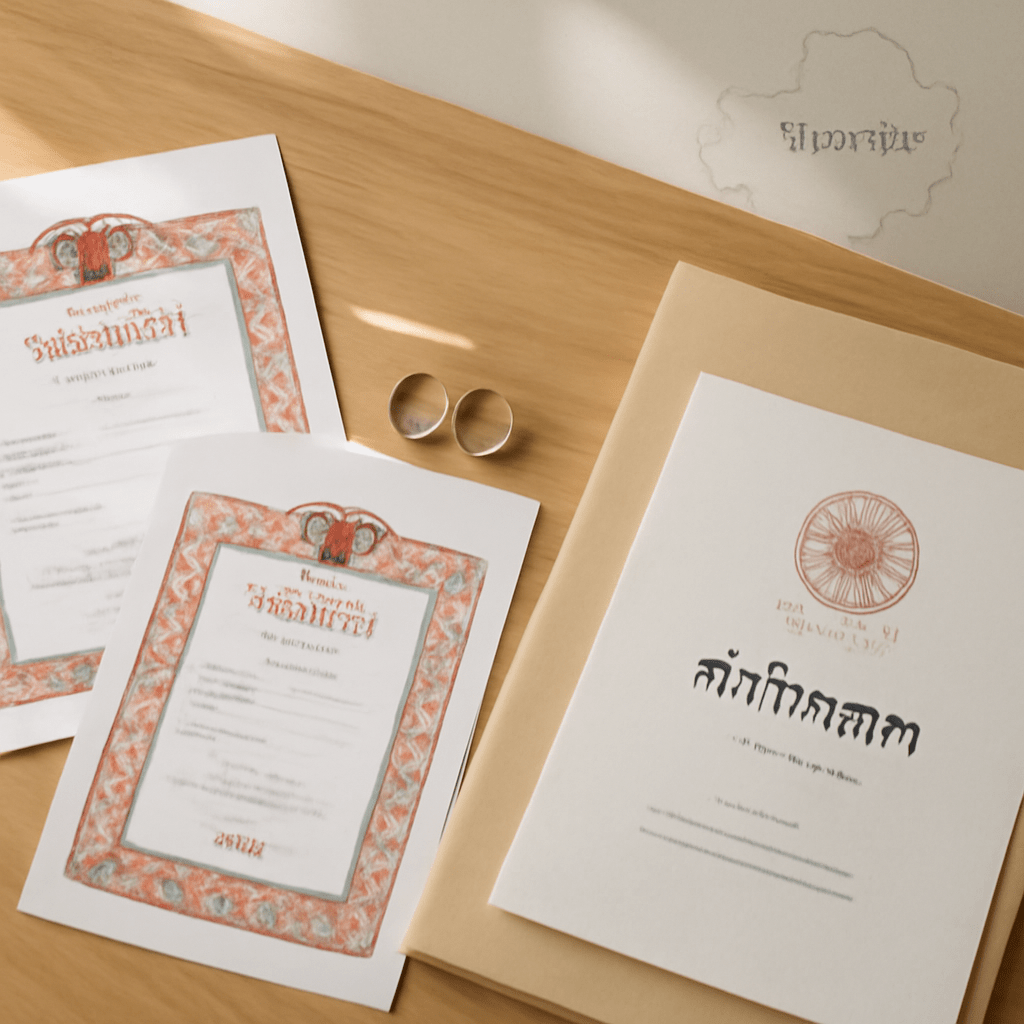
When a marriage breaks and neither spouse will sign the same page, you don’t “go to the district office and ask nicely.” In Udon Thani, that’s a court case—fact-driven, document-heavy, and unforgiving to guesswork. The law demands recognized grounds, credible evidence, and a plan for children, property, and debts that won’t collapse on scrutiny. If you’re already in a standoff, the fastest route is rarely a sprint; it’s a careful climb, step by step, protecting what matters while keeping settlement options alive if they help more than they hurt.
Quick Answer

Contested divorce in Udon Thani: what it is, what it isn’t
It’s litigation in the Thai court system when spouses cannot agree on critical terms. It’s not the administrative divorce at a district office. You’ll need a legal ground, pleadings, evidence, and a plan for children and finances.
“Contested” means you cannot finalize by signing together at the district office. One or both spouses dispute the divorce itself or its terms—custody, visitation, child support, property, debt, maintenance. The forum shifts from the District Office (amphur) to the court. The law then demands proof, not just frustration.
Mutual consent divorce still has its place. If you and your spouse can truly agree, Thai law allows an administrative divorce by registration. That agreement must be in writing, signed and witnessed as required by Thai law, and the divorce becomes effective only when properly registered—typically at a district office. Sensible agreements cover property, debts, custody, visitation, and child support. If you cannot agree, court proceedings may be required instead of administrative registration.
| Topic | Mutual Consent (Administrative) | Contested (Court) |
|---|---|---|
| Route | Registration at District Office if both spouses agree | Filed as a lawsuit in court when there’s no agreement |
| Core Requirement | Written, signed, properly witnessed agreement | Recognized legal ground and admissible evidence |
| Outcome Control | Spouses craft terms | Judge decides if no settlement is reached |
| Timing | Varies by office and documents | Varies by court schedule, evidence, translations |
| Documents | IDs, marriage certificate, written agreement; details may vary by office | Pleadings, service proof, evidence, witness testimony |
If you’re evaluating both paths, get precise advice before you start. Requirements can vary by district office, and timing depends on document completeness, translations, and—if foreign-issued documents are involved—legalization steps.
For case-specific guidance, see Divorce Lawyer Udon Thani.
Divorce grounds Thailand Civil Code—what the court needs to see
You must plead at least one statutory ground (for example adultery, serious misconduct, desertion, or long-term separation) and prove it with credible evidence. No ground, no divorce decree.
Thai law doesn’t grant a contested divorce just because the marriage feels over. The court looks for specific legal grounds stated in the Civil and Commercial Code. Common categories include adultery, serious marital misconduct, desertion for a legally significant period, and long-term separation—among others defined by statute. Details and thresholds matter; what sounds obvious in conversation may be unclear in law.
Practical point: some grounds are time-sensitive or can be undermined by reconciliation. If you discover misconduct and later resume marital cohabitation for a meaningful period, your case theory may erode. Before you act (or move back in), get advice.
- Evidence often decides the ground: documented communications, witness testimony, financial records, or patterns of absence.
- Allegations alone rarely carry the day; credibility and corroboration do.
- Filing the wrong ground—or too many unfocused grounds—can weaken your position.
Strategy isn’t about drama; it’s about fit. Choose the ground that aligns with the facts you can prove, not the story you most want to tell.
Court divorce process in Udon Thani: from plaint to judgment
File the case, arrange service, attend the court’s management and mediation sessions, present evidence at hearings, and await judgment. Appeals may follow. Timelines depend on the court’s schedule, complexity, and how quickly both sides move.
Contested cases move through Thailand’s family court system with a rhythm that rewards preparation. Expect structure—punctuated by windows for negotiation.
- Pleadings: Your lawyer drafts and files the plaint. It states the ground, the relief sought (divorce, custody, support, property determination), and attaches core documents where appropriate.
- Service of process: The other spouse must be served properly. Alternative service requires court permission. Poor service invites delay.
- Case management and mediation: Family courts encourage problem-solving approaches. Settlement can happen at this stage or later, often with court facilitation. If partial issues settle (e.g., temporary child arrangements), the court may record terms.
- Evidence hearings: Witnesses testify; documents are identified and admitted if they meet evidentiary standards. Cross-examination matters. Keep translations certified and sequencing tight.
- Judgment: The court issues a decision on divorce, children, and property issues it was asked to decide and had evidence to resolve. Written reasons follow.
- Post-judgment steps: Options may include appeal within the statutory timeframe, enforcement steps, or registration actions where required.
Mediation is not a sign of weakness; it’s a diagnostic tool. If settlement protects children and stabilizes finances without giving up essentials, it’s sensible. If not, you continue—and you do so with a cleaner record of what was offered and why it wasn’t enough.
If custody is central to your case, preview the framework here: Child Custody and Visitation Rights in Udon Thani.
Children first: custody, visitation, and support
Thai courts apply a best-interests standard. Either parent may be awarded custody, or the court may approve structured parenting time. Child support turns on the child’s needs and each parent’s means.
Parenting disputes are not scored like property disputes. The court’s lens is the child’s welfare—stability, safety, schooling, health, and a workable relationship with both parents where appropriate. Labels are less important than the lived reality of caregiving.
- Custody and parental decision-making: The court can allocate parental power to one parent or recognize shared roles. What you’ve actually been doing for the child—day-to-day care, medical decisions, school engagement—carries weight.
- Visitation and time-sharing: Specific, predictable schedules reduce conflict. Exchanges near school or in public places can be approved if they lower friction. Holidays need forethought.
- Child support: There is no one-size number. The court looks at the child’s reasonable needs and the parents’ financial capacity. Be ready with budgets, receipts, and proof of income—not just claims.
Do not weaponize the child. Judges notice. If safety is a concern, raise it responsibly and document it. If it isn’t, support the child’s relationship with the other parent while you protect your legal position.
Property, debts, and the paper trail
Thailand distinguishes personal property and marital property. Classification hinges on timing, source of funds, documentation, and credible testimony. Outcomes depend on facts and court discretion—no fixed split is guaranteed.
Property issues turn on classification more than slogans. Thai law distinguishes between personal property and marital (community) property. How an asset is labeled, when and how it was acquired, and whose money built its value—all of that can matter. Debts follow the same logic: why the debt was incurred, who benefited, and what the paperwork shows.
- Real estate: Titles, purchase agreements, mortgage records, and transfer slips. If ownership structures are complex (companies, nominees, or mixed funds), expect close scrutiny.
- Bank and investment accounts: Statements across the marriage timeline, not just the last quarter. Look for inflows that match salary or business revenue, and outflows tied to family expenses or unexplained transfers.
- Businesses: Share registers, financials, director minutes, and tax filings. Value can hinge on books and the story behind them.
- Vehicles and valuables: Registration documents, appraisals, and insurance records.
- Debts: Loan agreements, credit card statements, business lines of credit. The purpose of the debt matters.
Strategy note: avoid unilateral transfers or asset “parking.” Courts can view sudden movements with suspicion, and counterparties may be dragged into the dispute. If preservation is necessary, seek lawful interim measures—not shortcuts.
If settlement is possible, terms addressing property, debts, child arrangements, and support should be reduced to writing, signed and witnessed as Thai law requires. If such terms are later to be registered (for an administrative divorce), the divorce becomes effective only upon proper registration. In a court proceeding, approved settlements can be recorded and enforced through the judgment.
Evidence you can actually use: a working checklist
Collect communications, financials, registrations, child-related records, and witness details. Keep originals safe, preserve metadata, and arrange certified translations or legalization where needed.
Good cases are built, not found. Start organizing now. The list below is practical, not exhaustive—your facts will add or subtract items.
- Identity and status: Marriage certificate (Thai or foreign), household registration extracts (if applicable), and any prior court orders.
- Communications: Emails, messages, call logs, letters. Export with timestamps where possible. Avoid illegal recording; admissibility depends on legality and court discretion.
- Financial records: Bank statements, payroll, tax filings, loan documents, credit card statements. Cover the whole relevant period, not just recent months.
- Property documents: Title deeds, purchase agreements, mortgage records, appraisals, vehicle registrations.
- Business records: Share registers, financial statements, director resolutions, major contracts.
- Child-related documents: School letters, medical records, extracurricular receipts, photos that show caregiving patterns.
- Witnesses: Names, contact details, a short note of what each can credibly confirm.
- Translations and legalization: Foreign-language or foreign-issued documents may need certified translation and, depending on use, legalization (for example, via the Ministry of Foreign Affairs). Requirements vary by district office and by what the court needs for authenticity.
Protect chain of custody. Don’t write on originals. Keep digital files in read-only folders and back them up. If you’re unsure about a piece of evidence, don’t discard it—ask counsel how to handle it properly.
For official guidance on registration steps and records, see the Department of Provincial Administration’s materials. For document legalization, consult the Ministry of Foreign Affairs.
Timelines, costs, and settlement windows
There is no standard duration or price tag. Most variation comes from evidence volume, translations, the need to serve abroad, the court’s calendar, and whether you settle some issues midstream.
People ask how long it will take and what it will cost. Honest answer: it depends—on your documents, the other side’s posture, service issues (especially if abroad), and the court’s schedule. Translation and legalization steps add time where foreign documents are involved. A lean, well-organized case moves better than a messy one.
- Expect phases: Filing and service; case management and mediation; evidence; judgment; potential appeal.
- Budget drivers: Evidence volume, expert work (e.g., asset valuation), translations, interlocutory applications, and the number of hearing days.
- Settlement windows: You can settle at any stage. If you pivot from contested to agreed terms, write them clearly, sign with proper witnesses, and—where the law requires for administrative registration—register them for effectiveness. In an active court case, the court can record or incorporate your settlement into the judgment.
Rushed deals create new problems. If you need terms to stand up at the district office or in court, draft like they’ll be tested—because they might be.
If your status in Thailand depends on marriage (e.g., certain visas), plan the immigration piece in parallel. An approved divorce can have immigration consequences.
When you’re ready to map options against facts, speak with our team: Divorce Lawyer Udon Thani.
Foreign spouses in Udon Thani: visas, translations, and practical friction
Foreign-issued documents often require translation and sometimes legalization. Divorce can affect visa status. Coordinate court, registration, and immigration steps early.
Cross-border elements complicate even simple cases. Some district offices expect legalized foreign documents for administrative actions. Courts focus on authenticity and reliability for evidence. Those are different tests, which is why planning matters.
- Translations: Use certified translators for any non-Thai documents you plan to submit.
- Legalization: Depending on the document and intended use, you may need legalization through the Ministry of Foreign Affairs or other channels.
- Visa status: Divorce can affect stay permissions tied to marriage. Review immigration steps in advance to avoid a gap. Start with this overview: Divorce and Retirement Visa in Udon Thani: Legal Implications for Foreign Spouses.
Administrative requirements can vary by district office, and court practices can evolve. If timing is critical—children’s school term, home sale, visa expiry—build your timeline around translation and legalization lead times, not hopes.
Did You Know? (Legal & Data Insight)
Did you know? Nationally, there was a total of 1 labor case filed, reflecting the priority level of legal issues across the country.
Source: Ministry of Justice Thailand, Open Data (MOJ)
Need Legal Assistance?
If your documents require translation, certification, or you are unsure which district office to choose in Bangkok, contact our legal team immediately. We will review your case, confirm local requirements, and help you register your marriage without delay.