
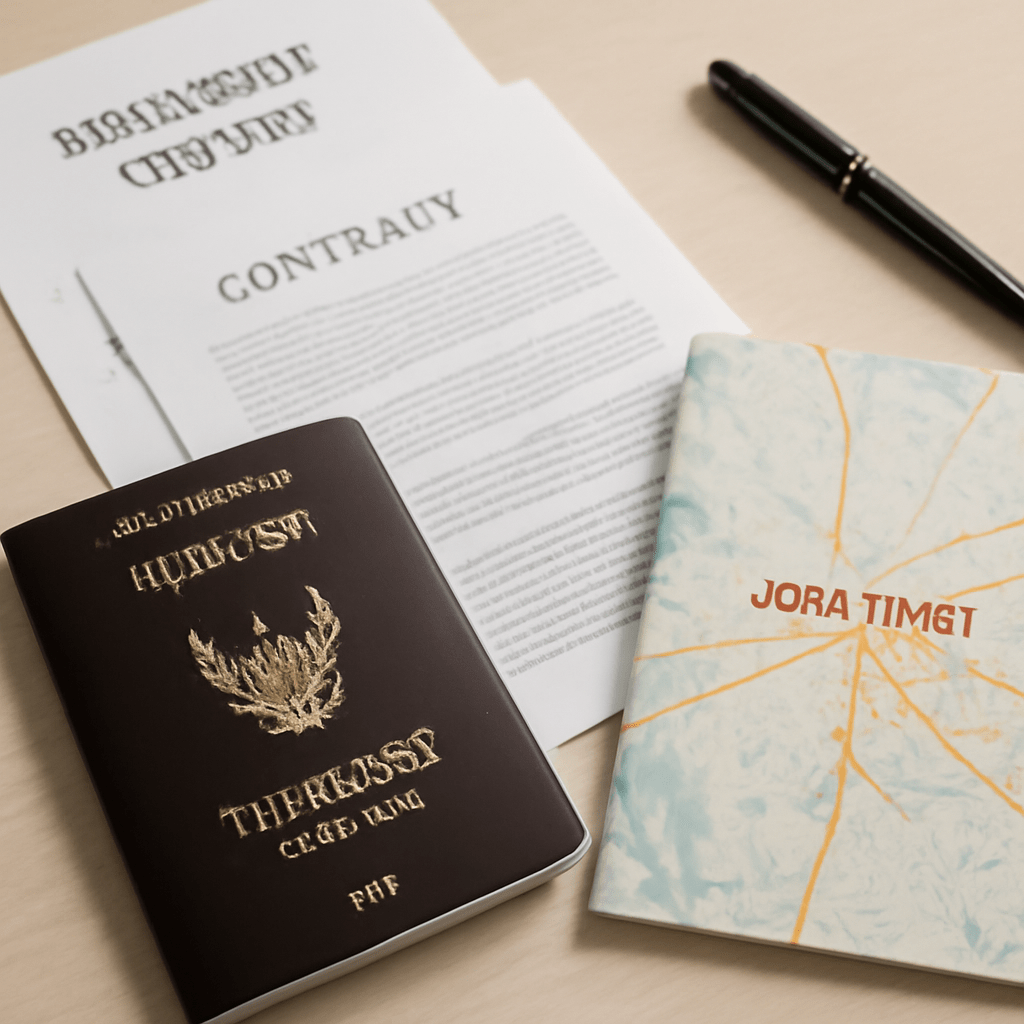
If you plan to run a company—or simply sign contracts—in Udon Thani, you want the legal ground solid before the first invoice. Thailand treats “work” broadly. Owners, managing directors, consultants walking through the front door to do real tasks may still need the right visa and a work permit. The path you take depends on what your company does, who owns it, and whether your project qualifies for BOI support. That’s the core of this guide: practical routes, the guardrails that matter under the Foreign Business Act, and a step-by-step sequence you can actually follow. No guarantees, no guesswork. Just what’s defensible now, with notes where the rules hinge on your facts and the district office.
Quick Answer

What counts as “work” in Thailand—and why business owners should care
Thai law treats “work” broadly. If you perform tasks in Thailand—founder, director, consultant—you likely need the right visa and a work permit linked to a Thai employer and a defined role.
Thailand does not limit the concept of work to payroll. If you perform professional or managerial tasks in Thailand—negotiate, supervise, draft and sign, direct operations—you are probably engaged in work under Thai law. The label on your business card (shareholder, advisor, founder) does not shield you if the substance is work. That’s why owners in Udon Thani should assume that day-to-day involvement requires the correct immigration status and a valid work permit.
Where does the permit come from? Work permits are administered under Thai labor regulations, and visas are overseen by Immigration. Guidance for investors and executives appears through the government’s investment channels as well; the One Start One Stop Investment Center maintains practical notes on obtaining a visa and work permit for qualified cases. See the OSOS overview for orientation on processes and coordination points.
Legal reality check: whether a specific activity counts as “work” is fact-dependent. If your role is purely passive ownership with no tasks performed in Thailand, that can be different—yet the line is narrower than many expect.
Two immediate implications for Udon Thani businesses: (1) build the visa and permit track into your project plan rather than trying to retrofit it after you start operations; (2) document what you actually do inside Thailand in a way that matches your authorized position. Mismatches invite questions. And questions slow everything down.
Reference: OSOS investor guidance on visa and work permit coordination offers a state-backed overview of pathways and documentation touchpoints for eligible cases.
Visa pathways that commonly lead to a work permit (Non‑B and BOI channels)
Most foreign executives and owners use a Non‑Immigrant B visa or a BOI-linked visa to lawfully work in Thailand. The right channel depends on your company’s activity, ownership, and eligibility.
The Non‑Immigrant “B” visa—your primary gateway. For many foreign owners and senior employees, the practical route into lawful work in Udon Thani is a Non‑Immigrant B visa anchored by a Thai employer. It comes in variants for employment, business visits, and sometimes for investors/owners when the company can support the case. If you’ve heard the phrase foreign business visa Thailand, this is usually what people mean in practice. For those searching locally, the non‑B visa for investors Udon Thani is not a separate legal class; it’s the same Non‑B, supported by an investment or employer dossier that Immigration accepts.
Application logistics vary. Many applicants secure the Non‑B at a Thai embassy or consulate abroad. In some situations, a change of status inside Thailand may be possible; this is discretionary and depends on current Immigration policy and your supporting documents. Plan for an external application unless advised otherwise based on your facts.
BOI-linked route. If your business qualifies for promotion by the Board of Investment (for example, in targeted industries defined by BOI criteria), the visa and work permit path can be streamlined through BOI systems and coordinated channels. BOI promotion can also affect foreign-ownership allowances and licensing of restricted activities. Whether you qualify is a technical analysis—reviewing BOI criteria, your business plan, and documentary readiness. The government’s BOI introduction explains aims and eligible activities at a high level.
Strategy tip: time the visa process with incorporation and staffing assumptions. Too early, and your documents age out; too late, and you stall operations. For a deeper investor-focused discussion, see our explainer on BOI promotion in Thailand for Udon Thani investors. For procedural signposts, the OSOS guidance on Getting Visa & Work Permit offers an official overview.
Requirements can vary by district office and over time. Always align your plan with the newest instructions and your company’s facts.
The Thai work permit in Udon Thani: essentials, employers, and documents
A work permit is employer‑ and role‑specific. It rests on the Thai company’s status, the defined position, and your qualifications. Expect document vetting and updates if your role or location changes.
Think of the work permit as a narrow license: it authorizes you to perform a defined job, for a specific Thai employer, at declared locations. If your title, scope, or workplace changes materially, the permit usually needs to be updated. If the employment ends, the permit is no longer valid for work activities.
Documents are the lifeblood of the application. Typical submissions include company registration records, tax and compliance evidence, corporate resolutions, your passport and visa, professional qualifications, and photographs. But the precise mix—formats, translations, legalization of foreign-issued documents—can vary by district office and by your role. Assume that foreign-language documents may need certified translation or legalization depending on the office and intended use.
- Employer obligations: maintain accurate corporate records; keep the employment and job description consistent with the permit; notify authorities of material changes.
- Employee obligations: carry or be able to present your permit data; respect the authorized duties and locations; track visa and reporting deadlines that attach to your stay.
- Practical timing: processing time depends on your document completeness, whether BOI is involved, and any foreign-document issues. Build buffers into launch dates.
For a wider compliance frame once you start hiring, bookmark our local primer: Thai Labor Law: What You Must Know Before Hiring Employees in Udon Thani.
Company setup routes for foreign owners in Udon Thani: standard, FBL, and BOI (what fits when)
Foreign ownership in Thailand is shaped by the Foreign Business Act. Your lawful route depends on activity: a standard Thai company with majority Thai shareholding, a Foreign Business License for restricted activities, or BOI promotion if eligible.
The Foreign Business Act (FBA) reserves certain activities to Thai nationals or restricts the extent of foreign ownership. That does not block foreign investment; it requires structuring. Broadly, you have three pathways—each with tradeoffs on ownership, licensing, and speed.
| Route | Foreign ownership | Typical use‑case | Licensing channel | Notes |
|---|---|---|---|---|
| Standard Thai limited company | Often majority Thai shareholding if the activity is FBA‑restricted | General trading or services where control can be structured within legal limits | Company registration with DBD | Check if your activity is restricted; layered agreements must respect Thai law and substance requirements. |
| Foreign Business License (FBL) | Foreign majority possible if a license is granted for restricted activities | Specific service or business where an FBL is feasible | Application under FBA | License is discretionary and activity‑specific; evidence of benefits to Thailand is often important. |
| BOI promotion | Often allows majority or 100% foreign ownership for eligible projects | Targeted industries meeting BOI criteria | BOI application and promotion certificate | May unlock visa/work permit facilitation; eligibility is technical and evidence‑driven. |
For the mechanics of incorporating, the Department of Business Development (DBD) publishes step overviews and forms; see the DBD company registration guide for official orientation. For policy context, the BOI’s introduction outlines promotion objectives and criteria at a high level.
Do not assume 100% foreign ownership is always available. It depends on your business activity and approvals. Align structure, licensing, and immigration planning from day one.
If you want a reality‑tested plan tailored to your sector and to Udon Thani timelines, start here: Business Lawyer Udon Thani.
Step‑by‑step: from planning abroad to your first legal workday
Sequence matters. Decide the structure, register correctly, prepare visa support, secure the Non‑B or BOI route, obtain the work permit, and only then perform work in Thailand.
- Map the business activity. Identify whether your services or trading lines touch FBA‑restricted lists. This drives ownership limits or licensing steps.
- Choose the legal route. Standard company with compliant ownership, FBL, or BOI promotion. Each route has different immigration implications.
- Register the company. Prepare names, objectives, capital, and director details. Follow DBD procedures and keep originals and certified copies organized. Where documents originate abroad, expect translation or legalization as applicable.
- Prepare the visa support. Job description, corporate resolution, supporting letters, and any BOI approvals if relevant. The exact bundle depends on office practice and your facts.
- Apply for the Non‑Immigrant B visa (or BOI‑linked visa). Many applicants apply outside Thailand; some change status inside Thailand depending on current policy and eligibility. Confirm the route in advance.
- Enter Thailand with the correct visa and complete post‑arrival steps. Coordinate the work permit application through the competent office; BOI cases may use dedicated systems.
- Receive the work permit. Verify that the employer name, job title, and location match reality. If your duties or workplace change, update before acting on the new scope.
- Start operations—legally. Track immigration reporting obligations attached to your stay and maintain clean payroll and corporate records. Timing and report types depend on your visa status and current rules.
Where timing varies: district office workload, document completeness, foreign-document legalization, and whether BOI is involved. Build slack into your go‑live date. A small delay on a missing apostille or translation can stall the whole chain.
Hiring in Udon Thani: labor law and HR compliance snapshot
Once you hire, Thai labor law applies—contracts, benefits, social security, and internal rules. Align HR paperwork with the immigration picture to avoid contradictions.
A visa and work permit get you in the door; labor compliance keeps you there. Your employment contracts, workplace rules, and payroll must line up with what you promised in your visa and work permit filings. Discrepancies invite scrutiny.
- Contracts: use clear, lawful terms that match the role and compensation represented to authorities.
- Benefits and leave: follow Thai statutory minima applicable to your workforce; keep policy documents bilingual if that reduces risk of misunderstanding.
- Social security and tax: register and report as required once you have employees. Consistency across filings matters.
- Records and audits: maintain verifiable time, pay, and role records; they should support your immigration positions.
For a concise local overview, see Thai Labor Law: What You Must Know Before Hiring Employees in Udon Thani. Requirements can shift; the specifics depend on headcount, industry, and your exact arrangements.
Paperwork overlaps: family status, translations, and when divorce paperwork matters
Immigration and corporate filings often pull in personal-status documents. If your marital status changes, handle it properly—documents and registrations affect visas and dependents.
Corporate and immigration procedures sometimes intersect with family law—spouse-based dependents, affidavits of support, custody evidence. If you face a marital status change while running a business in Udon Thani, observe the basics under Thai law to keep your filings truthful and your record clean.
- Divorce by mutual consent must be in writing, and it must be signed and witnessed as required by Thai law.
- Where registration is applicable, the divorce becomes effective only when properly registered at the competent office.
- Agreements should address property, debts, children, custody, visitation, and support where relevant.
- Foreign-language or foreign-issued documents may require translation or legalization depending on the district office and the intended use.
- If spouses cannot agree, court proceedings may be required instead of administrative registration.
These steps matter even when your main focus is the Thai work permit Udon Thani process—because Immigration and labor filings scrutinize identity, dependents, and marital status. For a careful walkthrough, see our guide on divorce by mutual consent in Udon Thani. Requirements can vary by district office and your specific facts.
Did You Know? (Legal & Data Insight)
Did you know? Nationally, there was only 1 case filed related to violations of the law prohibiting excessive interest rates, highlighting the significance of legal issues in the broader context.
Source: Ministry of Justice Thailand, Open Data (MOJ)
Need Legal Assistance?
If your documents require translation, certification, or you are unsure which district office to choose in Bangkok, contact our legal team immediately. We will review your case, confirm local requirements, and help you register your marriage without delay.