
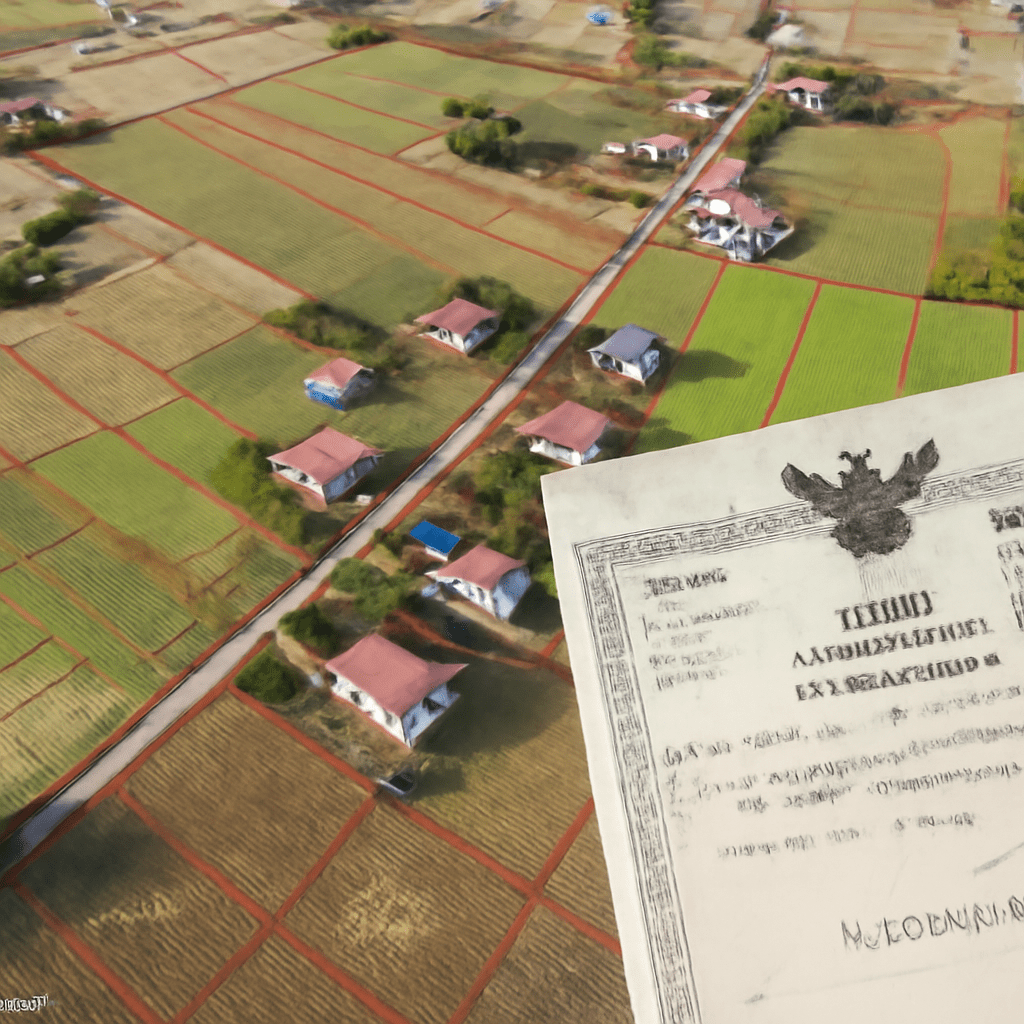
Buying land in Udon Thani can be straight‑forward when the title is clean, the history is readable, and the encumbrances—if any—are known and manageable. Or it can get sticky. The difference usually comes down to one thing: how well you verify the land title before you put down money. This guide lays out the official checks, what they actually tell you, what they cost in principle, and the practical sequence we use for foreign clients. No hype, no folklore—just what moves a deal forward without regrets.
Quick Answer

Why Title Verification in Udon Thani Is Non‑Negotiable
Because the deed tells you who can sell, what is already granted over the land, and where the boundaries really lie; without that, you’re guessing with serious money.
Udon Thani has active agricultural, residential, and mixed‑use markets. Titles circulate, families subdivide, banks secure loans, and developers stitch parcels together. In that movement, records accumulate—mortgages, leases, usufructs, servitudes, attachments. The Land Office keeps those records. Your job is to read them correctly before you commit funds.
A verified title does four things for a buyer: it confirms the named owner’s authority to sell; it reveals registered rights that continue after purchase; it ties the paper map to the ground you’re actually walking; and it frames your risk—so you can price it, insure it, or walk away.
Requirements can vary by district office and by the facts of your file. If you’re using foreign documents (for example, a power of attorney executed abroad), expect translation and possible legalization steps—best confirmed in advance with the specific office.
Know Your Thai Title Categories
Different title types carry different certainty about boundaries and registrable rights. Always identify exactly what you are buying.
Thailand’s land system is layered. The title type affects how clear the boundaries are and what can be registered against the land. Below is a high‑level comparison—useful for orientation, not a substitute for a file‑specific review at the Land Office.
| Title category | Usual characteristics | Registrable rights commonly seen |
|---|---|---|
| Chanote (Nor Sor 4 Jor) | Highest grade title; surveyed with fixed coordinates on the cadastral map. | Mortgage, lease, usufruct, servitudes (rights of way), superficies; other registrable interests per law. |
| Nor Sor 3 Gor | Upgraded survey compared to Nor Sor 3; boundaries defined with reference to the map, but not to the same precision as Chanote. | Generally similar registrable rights; verify details on the instrument and with the Land Office. |
| Nor Sor 3 | Older system; boundaries described by adjacent parcels and measurements; conversion or upgrade may be possible subject to law and process. | Registrable rights may be recorded; confirm case‑by‑case. |
| Sor Kor 1 (SK1) and possession documents | Evidence of possession/claim rather than a full title deed; transfers and registrations can be limited. | Rights are constrained; seek legal advice before contracting. |
Terminology in Thai prevails at the Land Office counter. If you’re not confident reading the Thai instrument, have a trained person translate it line‑by‑line, not just the title type label.
Official Steps at the Land Office: What to Request and Why
Bring the title number and plot details, request certified copies and an encumbrance extract, obtain the cadastral map, and verify the seller’s capacity to transfer.
Verifying a land title in Udon Thani means dealing with the Land Office that has jurisdiction over the parcel—often a district Land Office, sometimes the Provincial Land Office, depending on location. The procedure is document‑driven and recorded in the title register.
- Identify the parcel precisely. Capture the title deed number, land number, survey page, and location. If the seller cannot produce a clear copy, pause.
- Request a certified copy/extract of the title deed. This confirms the current registered owner and shows endorsements.
- Obtain an encumbrance extract. You want a clear list of registered rights: mortgages, leases, usufructs, servitudes, superficies, court attachments, and any restrictions recorded on the back of the deed or in the register.
- Ask for the cadastral map sheet (as available). Compare lines, angles, and neighbors. If boundaries on the ground look fuzzy, consider a re‑survey request through the Land Office.
- Verify the seller’s authority and marital status. If the owner is an individual, confirm identity and whether spousal consent is required under Thai matrimonial property rules. If the owner is a company, review company affidavits, director authority, and any corporate resolutions needed for a sale.
- Match the paper to the property. Walk the site. Look for physical encroachments, informal rights of way, utility lines, or occupation inconsistent with the title map.
- Resolve discrepancies early. If neighbors contest a boundary, or if an old mortgage appears unpaid on paper, do not deposit purchase funds until the record is corrected at the Land Office.
Document requirements to obtain copies and extracts can vary by district office—some offices may ask for identification, proof of interest, or an authorization if you are not the owner. Timelines also vary with workload and completeness of the request.
For a fuller due diligence workflow, see our Due Diligence Checklist for Foreigners Buying Property in Udon Thani.
Encumbrances and Registrable Rights to Watch
Mortgages, long leases, usufructs, servitudes, superficies, and court attachments travel with the land unless properly discharged or consented at transfer.
Thai law recognizes several rights that—once registered—bind successors. If you buy, you take the land subject to them. Read the endorsements; then verify discharges or consents in writing at registration.
- Mortgage: Bank or lender security. Requires a formal release to clear.
- Lease: A registered lease (for terms that meet registration thresholds) grants the tenant possession for the term. Check duration and options.
- Usufruct: Grants another person the right to use and enjoy the land. Often personal to the holder.
- Servitude (right of way, utilities): Grants passage or specific use across the land; typically perpetual unless otherwise stated.
- Superficies: Separates ownership of buildings from the land; relevant when structures are owned by someone other than the landowner.
- Court attachment or seizure: Signals a legal dispute or enforcement; do not proceed without resolution.
Unregistered side agreements do not override registered rights. If a seller promises to remove an encumbrance, the only safe moment is when the Land Office records the discharge simultaneously with your transfer.
Costs, Timeframes, and What Changes Them
Expect official fees for certified copies, extracts, maps, and any re‑survey; translation/legalization if using foreign documents; plus professional advisory fees—timing varies by office and file complexity.
Verifying a land title has predictable categories of cost, even if the exact amounts change over time and vary by office:
- Official Land Office fees: For certified copies, encumbrance extracts, and cadastral map prints. If you request a re‑survey or boundary marking, additional fees apply and scheduling depends on office workload and field conditions.
- Translation and legalization: If you rely on foreign‑language documents (passport notarizations, powers of attorney, company documents), certified Thai translations and legalization may be required depending on the office and the document’s role.
- Professional fees: Legal review, on‑site inspection, and negotiations to clear encumbrances or structure registrable rights (for example, a properly drafted superficies or lease).
- Incidental costs: Travel to the Land Office, mapping copies, and document couriering when originals must be presented.
Timeframes depend on the specific district office in Udon Thani, document readiness, whether a re‑survey is needed, and whether third parties (banks, tenants, neighbors) must sign off. If timing is critical—say, funds are tied to a closing date—speak with the office early and build float into your contract.
A Practical Pre‑Purchase Checklist
Run these checks in sequence and pause the deal if any box remains open.
- Collect a legible copy of the title deed with the deed number, land number, and map.
- Confirm the title category (Chanote, Nor Sor 3 Gor, etc.) and the named owner.
- Obtain a certified copy and an encumbrance extract from the Land Office.
- Cross‑check the cadastral map with visible boundary markers and neighboring parcels.
- Verify seller identity, marital status, and—if applicable—spousal consent or corporate signing authority.
- Identify all registered rights: mortgage, lease, usufruct, servitudes, superficies, attachments.
- Agree in writing who will clear each encumbrance, how, and by when; tie it to the transfer appointment.
- Use bilingual contracts where needed; ensure any foreign‑language documents are translated or legalized as required by the office.
- Stage payments: deposit into escrow or use conditional payment arrangements aligned with registration.
- If something feels off, stop and escalate—see our Property Disputes guidance for foreigners in Udon Thani.
Foreign Buyer Realities: What You Can and Cannot Own
Foreigners generally cannot own land in Thailand; lawful alternatives exist, and condominium ownership is regulated by foreign quota rules.
If you are not a Thai national, plan within the rules. The Department of Lands publishes guidance on foreign rights in land and condominiums. In broad terms, foreigners generally cannot own land outright, except in limited situations under specific investment laws and processes. Lawful alternatives such as long‑term registered leases, usufruct, and superficies can secure use rights over land.
Condominiums are different: foreigners can purchase freehold units within the foreign quota. Quota calculation and proof of foreign funds are regulated. See: Department of Lands: Foreign rights in land and condominiums and the regulation on foreign condominium ownership.
Avoid structures that try to simulate foreign land ownership through nominees or sham shareholding. They create legal risk and can undermine your bargaining power at the worst possible moment—at registration. When in doubt, get advice tailored to your facts and the particular Land Office handling your file.
When Property and Family Law Intersect
If the land is marital property, paperwork and timing can hinge on family‑law facts—plan for them openly.
Two common intersections:
- Spousal consent: If the titled owner is married and the land is part of the marital estate, spousal consent may be required for a transfer. Confirm status early; ask for appropriate evidence.
- Divorce settlements: If the seller is dividing property due to divorce, note that a divorce by mutual consent must be in writing, signed and witnessed as required by Thai law, and it becomes effective only when properly registered if that is the applicable legal step. Agreements should address property, debts, children, custody, visitation, and support where relevant. If spouses cannot agree, court proceedings may be required instead of administrative registration. Foreign‑language or foreign‑issued documents may require translation or legalization depending on the office and intended use. For process detail, see our guide on Divorce by Mutual Consent in Udon Thani.
Property deals die in the paperwork more often than on price. If family‑law documents control who can sign or when, build those conditions into your sale contract and your closing timeline.
Red Flags, Remedies, and When to Escalate
Stop, document, and switch to formal channels when encumbrances don’t match promises or boundaries don’t match the map.
Escalation is not drama—it’s discipline. Consider pausing the deal and taking formal steps when you see:
- Unreleased mortgages or leases that the seller says are “already cleared” but still show on the encumbrance extract.
- Boundary disputes or encroachments that cannot be reconciled with the cadastral map on a site walk.
- Inconsistent seller identity, authority, or marital consent paperwork.
- Demands to pay outside of escrow or before the Land Office confirms discharge documents.
In these cases, we put the facts in writing and either negotiate a clean path to registration or prepare for dispute management. See our page on Property Disputes for Foreigners in Udon Thani for realistic next steps.
If you are evaluating future succession issues, start earlier rather than later: Can a Foreigner Inherit Land in Thailand?
Did You Know? (Legal & Data Insight)
Did you know? Nationally, there was only 1 case filed concerning ‘Village Funds,’ highlighting the relative priority of legal issues across the country.
Source: Ministry of Justice Thailand, Open Data (MOJ)
Need Legal Assistance?
If your documents require translation, certification, or you are unsure which district office to choose in Bangkok, contact our legal team immediately. We will review your case, confirm local requirements, and help you register your marriage without delay.