
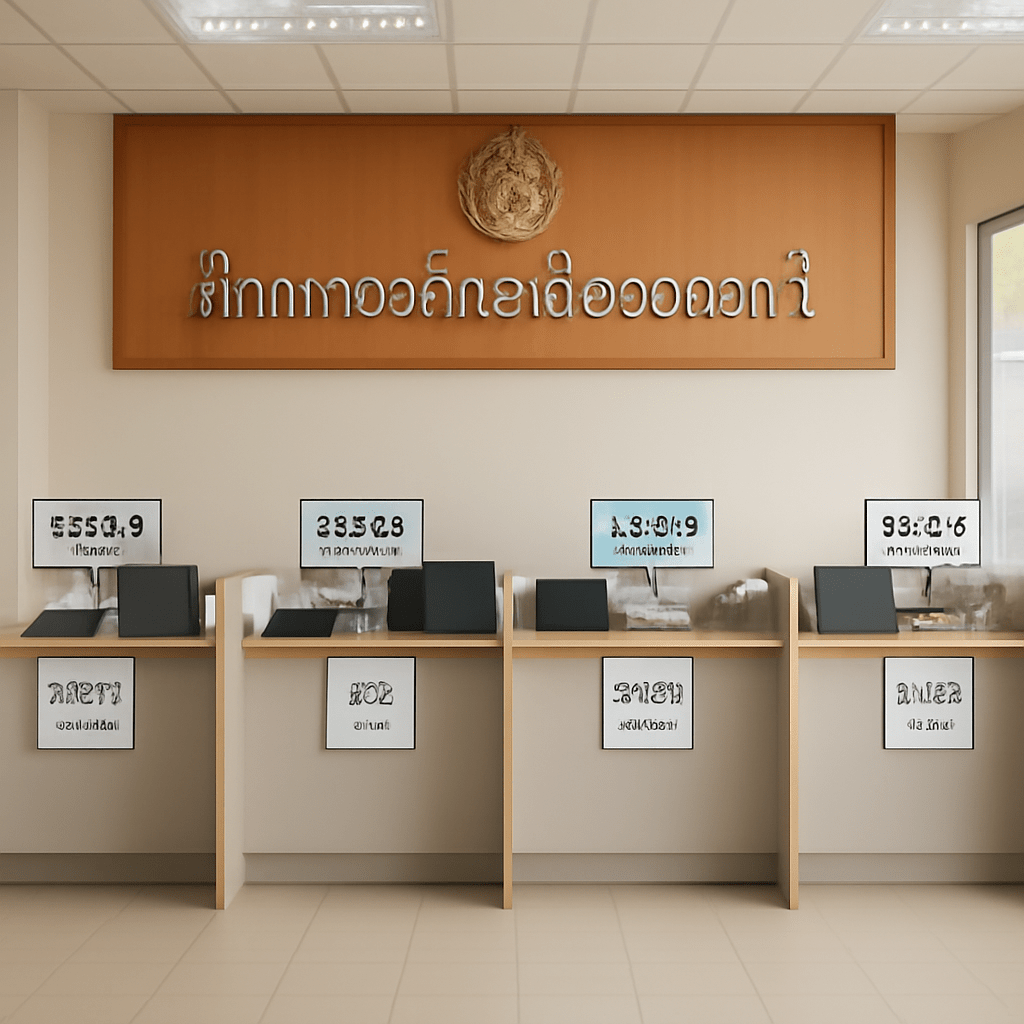
Some divorces end with a quiet signature at the district office. Others wind toward court, translation desks, and tough negotiations about children, property, or debt. Udon Thani has both stories—sometimes in the same week. The question isn’t whether a divorce lawyer is always better than DIY. It’s whether the facts of your marriage, your documents, and your level of agreement make the risk of self-divorce acceptable. If you want a brief, clear path: a mutual-consent divorce can be registered administratively, but only if the paperwork and agreement are right and both spouses are truly aligned. If you’re split on assets or parenting—or if foreign documents enter the picture—precision matters, and counsel often pays for itself by preventing rework and surprises.
Quick Answer

The Fork in the Road: Lawyer-led vs DIY in Udon Thani
Choose DIY only when both spouses agree on everything and the paperwork is straightforward; choose a lawyer when facts or documents are uncertain, cross-border issues appear, or any term is disputed.
You’re weighing two paths that are both legitimate under Thai law, but they are not equivalent. A mutual-consent divorce can be registered at a district office when both spouses attend, produce acceptable identification and marriage records, and present a written agreement that complies with Thai legal formalities. That route is administrative—fast in principle, less costly in direct fees, and entirely dependent on your preparation.
Where DIY breaks is predictable: incomplete agreements, missing documents, translation problems, or a last-minute disagreement about children or money. When even one of those surfaces, a lawyer-led process—whether to refine a registration, broker a settlement, or file a case—protects you from unenforceable terms and repeated trips to public offices. It also becomes essential if mutual consent fails and you must consider court proceedings instead of administrative registration.
The headline difference is not philosophy but risk. DIY prioritizes speed and autonomy; counsel prioritizes structure, enforceability, and risk control. Your family’s facts decide which trade-offs are sensible.
DIY Divorce at the District Office: What It Really Takes
For a mutual-consent divorce, you need a written agreement, proper signatures and witnesses as required by Thai law, and successful registration at the district office; exact document requirements and timing can vary by office.
In Thailand, a divorce by mutual consent must be in writing, signed, and witnessed as required by Thai law. When the spouses present the agreement and their documents at the district office and the registration is accepted, the divorce becomes effective upon proper registration. Without that registration step—where applicable—the divorce is not complete, even if you both “agree in principle.”
What the office checks, and how, is administrative. It is not a forum for contested decisions. The district officer does not adjudicate who should get the house or how weekends are shared; the office records a compliant agreement. If no agreement exists, or if the officer cannot accept your documents, your next stop may be legal advice and possibly court.
General step sequence for DIY (mutual consent), acknowledging local variation:
- Confirm eligibility for administrative registration of your divorce at the chosen district office in Udon Thani. Requirements can vary by office and individual facts.
- Prepare a written divorce agreement that addresses, as relevant, property, debts, children (custody, visitation, and support), and any other settled terms. Ensure the agreement is properly signed and witnessed under Thai law.
- Gather identification and marital records. This typically includes valid IDs and the marriage certificate; for foreign-language or foreign-issued documents, translation or legalization may be required depending on the office and the intended use.
- Attend the district office together for registration. Timing depends on the office’s workload, completeness of your file, and any translation or authentication issues.
- Obtain official registration confirming the divorce, if accepted. Keep copies safely; they may be needed for banks, consulates, or future administrative processes.
For broad, official guidance on family registration processes, review the Department of Provincial Administration’s materials and Q&A. Keep in mind those resources are general and offices can apply them with local administrative nuance.
- DOPA family registration guide (Department of Provincial Administration)
- DOPA divorce registration Q&A handbook
Legal caution: Document requirements and acceptance standards can differ by district office. If your marriage was registered abroad or your records are in a foreign language, budget time for certified translation and any needed legalization through the Ministry of Foreign Affairs.
Self-Divorce Thailand Risks You Should Not Ignore
The main DIY risks are unenforceable or incomplete agreements, misclassification of assets or debts, child-related terms that lack clarity, and rejected documents—especially with foreign records.
“We’ll just sign and be done.” That line unravels the moment details appear. Here are the common self-divorce Thailand risks we see in and around Udon Thani:
- Formalities missed. A mutual-consent divorce must be in writing, properly signed, and witnessed. If the district office cannot accept your paperwork, you do not have a registered divorce.
- Gaps in the agreement. Vague terms—who pays which loan, who keeps which account, how holidays work—invite later conflict. Administrative registration is not a safety net for missing terms.
- Assets vs. debts, misclassified. Whether something is marital or personal property depends on facts and documents. The classification, and how you divide it, can be affected by the route you choose. Office staff generally record your agreement; they do not investigate bank statements or decide fairness.
- Children under-defined. Custody, visitation, and support must be clear and workable. If your terms are ambiguous or impractical, the paper may say one thing while actual life goes another—risking disputes later.
- Cross-border complications. Foreign-language or foreign-issued documents can derail a same-day plan. Translation and legalization steps, if needed, take time and add moving parts.
- Language and nuance. If one spouse cannot follow the Thai-language discussion at the counter, misunderstandings creep in. An agreement that looks simple may be interpreted more narrowly than intended.
- Unintended spillover. Divorce terms can affect immigration status, future property transactions, or finances. Getting the instrument right the first time is usually cheaper than repairing it.
If any of these resonate, pause. Clean paperwork beats speed, and neutral drafting beats wishful thinking. When in doubt, bring in counsel before you try to register.
When a Divorce Lawyer Makes Economic Sense
Hire a lawyer when anything is contested, cross-border, document-heavy, or uncertain; good drafting and process control often prevent delays and downstream disputes.
A lawyer is not a luxury add-on; sometimes it’s the only rational choice. You will likely benefit from counsel if:
- Agreement is partial or fragile. Negotiation support and precise drafting can turn a verbal truce into a registrable, durable agreement.
- Children are involved. Clear terms on custody, visitation, and support protect predictability. See our explainer: Child Custody and Visitation Rights in Udon Thani: What Thai Law Allows.
- Property or business stakes are real. Classifying marital vs. personal property requires facts, documents, and careful drafting. Do not rely on office registration to fill the gaps.
- Cross-border documents exist. Bilingual agreements, certified translations, and guidance on any needed legalization steps help prevent rejection at the counter.
- Mutual consent may fail. If talks break down, court proceedings—instead of administrative registration—may be required. Preparation now avoids starting from scratch later.
Our team in Udon Thani focuses on practical outcomes and careful instruments. If you want formal help, learn how we work here: Divorce Lawyer Udon Thani.
Property, Debts, and Children: Why the Route You Choose Matters
District offices register compliant agreements; they do not decide disputes. If you cannot agree, court proceedings may be required—affecting how property and parental terms are determined.
Your route shapes your outcome. In a mutual-consent registration, the district office records what you agree. It does not adjudicate fairness, verify bank ledgers, or weigh testimony. In a court route, a judge can decide disputed issues. Classification of assets and debts—and how they’re divided—depends on facts, documents, and the procedural route. No law firm can responsibly promise a fixed split without seeing the file.
On children, be concrete. Agreements should address custody, visitation, and support, and be drafted so real life—school terms, travel time, costs—fits the document. Thin clauses create thick conflicts.
| Issue | DIY Registration (Mutual Consent) | Lawyer-led or Court Route |
|---|---|---|
| Decision-maker | Spouses, via written, witnessed agreement | Spouses (negotiation) or Judge (if contested) |
| Property & Debt | Recorded as agreed; no investigation or adjudication by office | Negotiated or determined through evidence and legal standards |
| Children | Agreed custody/visitation/support terms registered | Negotiated parenting plan or court-determined orders if disputed |
| Documents | Must meet office requirements; translations/legalization may be needed | Formal evidence, filings, and procedure control by counsel |
| Risk Profile | Low cost; higher risk of gaps or rejection if unprepared | Higher upfront cost; lower risk of unenforceable or incomplete terms |
Planning to self-file? Use a checklist and build in time to fix issues before you take a queue number.
Checklist: Prepare for Either Path
Gather identification and marital records, draft a detailed agreement, plan for translations/legalization if needed, and align on children and finances before you seek registration or file.
Every divorce is different, but preparation follows a pattern. Keep this pragmatic list close—and remember that document requirements can vary by district office:
- Identity and marital records (as applicable): valid identification, marriage certificate, and any prior name-change or registration records.
- Written divorce agreement that covers property, debts, custody, visitation, and support where relevant—properly signed and witnessed as Thai law requires.
- Evidence of assets and debts: titles, bank summaries, loan documents—enough to avoid accidental omissions in your agreement.
- Translations and legalizations: for any foreign-language or foreign-issued documents, confirm if certified translation or MFA legalization is needed.
- Parenting specifics: schedules, travel handovers, school and holiday plans, cost-sharing for education and healthcare.
- Financial mechanics: how and when transfers occur, account closures, debt payments. Write it down, don’t leave it to memory.
- Contingency plan: what you will do if the district office declines registration, or if negotiations stall—speak with counsel in advance.
For a deeper preparation walkthrough, see our Divorce Checklist for Udon Thani: Essential Documents and Steps.
Costs, Timing, and Practical Expectations in Udon Thani
Administrative fees are usually modest; legal, translation, and legalization costs vary by case. Timing depends on the district office, document completeness, and any foreign-document issues.
Let’s set mature expectations. Administrative registration fees tend to be modest, but that is not the whole picture. Your real costs live in drafting, translation, and—if needed—legalization or legal advice. Lawyer fees vary by complexity and the amount of negotiation required. It is common to spend less on a simple mutual-consent registration than on a contested or cross-border matter; that’s a function of time and risk management, not billing style.
Timing is the same story. A clean, fully bilingual file may register quickly. A file with missing witnesses, unclear terms, or foreign records without certification will not. Timing depends on the district office, completeness of documents, translations, and foreign-document issues. Plan buffers. Document once, correctly.
If you want an experienced hand steering you to the lowest-risk path that still respects your budget, talk to us before you queue up.
Did You Know? (Legal & Data Insight)
Did you know? Nationally, there was only 1 case filed regarding compensation for defendants in criminal cases, reflecting the overall significance of legal issues in Thailand.
Source: Ministry of Justice Thailand, Open Data (MOJ)
Need Legal Assistance?
If your documents require translation, certification, or you are unsure which district office to choose in Bangkok, contact our legal team immediately. We will review your case, confirm local requirements, and help you register your marriage without delay.