
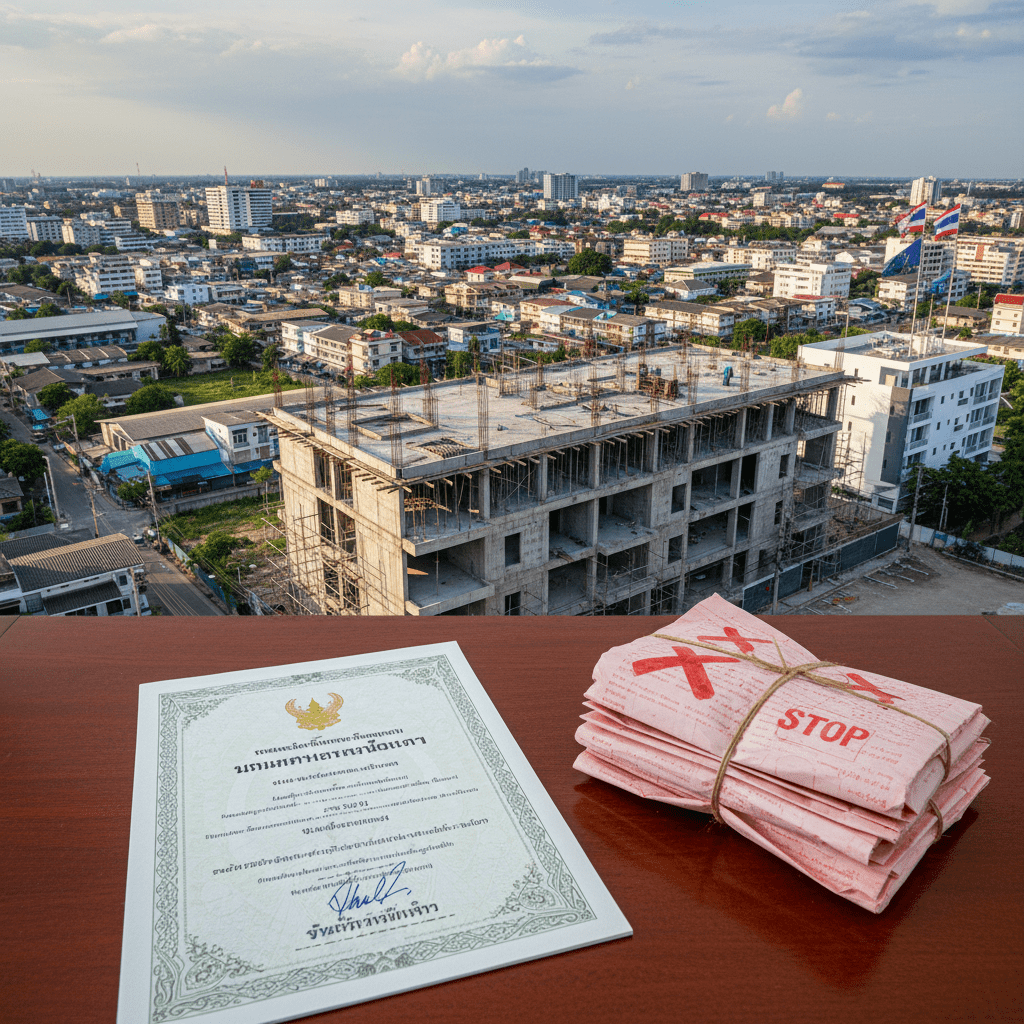
Udon Thani isn’t just a city of golden temples and Isan culture — it’s a magnet for foreign investors chasing affordable land and quick deals. But the scent of opportunity can mask legal landmines. Thai law restricts foreign freehold ownership outside Bangkok’s designated zones, yet scams still bloom like water lilies in the rainy season. One misstep can turn a dream villa into a decade-long court battle. This guide spots the 10 most common — and costly — risks foreigners face when buying land in Udon Thani, so you walk away with clear title, not a court summons.
Quick Answer

Title fraud and fake deeds: the silent land killer
Fake titles and forged Chanote deeds lurk in Udon Thani’s hinterlands; insist on originals verified at the Land Department, not photocopies or scanned files.
Every year, foreign buyers lose millions in Udon Thani to title fraud. The weapon? A forged Chanote title (Nor Sor 4 Jor) or a fake Por Bor Tor 5 land-use certificate. Scammers copy official stamps, alter names, or inflate boundaries — and the foreign buyer never sees the trap until the bank freezes the land for a court order.
How does it happen? Often, the seller — or an intermediary — presents a photocopy of the title deed, claiming the original is “with the bank” or “at the amphoe office.” They may even offer a “guarantee letter” signed by a village head. None of these substitutes are legally binding. Original titles must be inspected in person at the Land Department (Department of Lands) in Udon Thani, or cross-checked via the department’s online system if available.
A red flag: the seller refuses to show the title in person, insists on meeting at a café, or pressures you to sign before verification. Walk away. If the seller is legitimate, they’ll produce the original at the Land Office during business hours — no exceptions.
Even a clean title can hide a time bomb: overlapping claims from family members. Thai law allows multiple family members to hold rights to the same plot under different titles. Always request a full ownership history (ประวัติการครอบครอง) for the last 30 years to spot silent siblings or uncles lurking in the background.
Bottom line: no title verification, no deal. Bring a Thai-speaking lawyer to the Land Office on the day of inspection. They’ll spot discrepancies in signatures, seals, and handwriting that a quick glance misses.
Illegal ownership structures: the lease trap and the pseudo-condo myth
Foreigners cannot own land outright in Udon Thani; 30-year (renewable) land leases are the norm, but 49-year leases are risky and often unenforceable beyond the first term.
Thai law bars foreigners from owning land outright outside Bangkok’s designated zones — and Udon Thani isn’t one of them. So how do foreigners “own” land? By signing a 30-year land lease, renewable for another 30 years. Simple in theory; messy in practice.
Many agents peddle “49-year leases” as a loophole. Legally, these are two 30-year leases stacked back-to-back — but renewal is never guaranteed. Courts have ruled that a second 30-year term is a new contract, subject to the landlord’s consent. If the landlord dies or sells, the lease may vanish overnight. Foreign buyers end up with a stack of paper that’s worthless in court.
Even worse: the “pseudo-condo” scam. Some developers sell “land-linked condos” where you buy a condo unit and get a 30-year land lease tied to it. The catch? The condo project isn’t registered as a condominium under Thai law. Without a condo license, the land lease is just a private contract — unenforceable against third parties. Check the Department of Lands condo registry to confirm the project is legitimate.
If you’re buying land, insist on a 30-year lease with a clear renewal clause — but understand that renewal isn’t automatic. If you’re buying a condo unit, verify the condo license number with the Land Department before you pay. No license? No deal.
A final trap: the “nominee” structure. A Thai friend or employee is listed as the owner, and you pay them to hold the land “in trust.” Thai courts routinely void these arrangements as illegal foreign ownership. If you’re caught in one, you have no legal recourse — and the land can be seized by the state.
Zoning surprises: when the land is green, but the law is red
Udon Thani’s zoning maps change faster than the Mekong’s currents; a "residential" plot may suddenly be zoned "agricultural" or "conservation" — blocking construction permits.
Udon Thani’s rural charm masks a patchwork of zoning rules that shift with the seasons. A plot you inspect in March might be zoned “residential” on paper — but by June, it’s reclassified as “agricultural” or “conservation.” The result? Your dream villa project stalls because the local sukhaphiban (municipal authority) refuses to issue a construction permit. Worse, if you build without a permit, the authorities can order demolition — and the bill lands in your lap.
How to avoid this? Before you sign, request a หนังสือรับรองการใช้ประโยชน์ที่ดิน (land-use certificate) from the local district office (อำเภอ). This document spells out the legal zoning and permitted uses. But even this isn’t foolproof — zoning maps are often outdated or misfiled. Ask the district office directly: “What’s the current zoning for this plot, and has it changed in the last five years?” If they hesitate, walk away.
Another red flag: the seller claims the land is “ready to build” or “has a construction permit.” Demand to see the permit in person at the sukhaphiban office. If the permit is for a different plot, or expired years ago, the seller is lying. Construction permits are public records — not secrets.
Finally, check the local เทศบาล (municipality) master plan. Some plots are zoned for agriculture, but the municipality has quietly rezoned nearby areas for industrial use. Industrial zones can bring noise, pollution, and lower property values. A quick visit to the municipality’s planning office can save you from a costly mistake.
Water rights and easements: when the well runs dry
Land with no water rights or hidden easements can turn paradise into a dust bowl — especially in Udon Thani’s dry season.
Udon Thani’s land market thrives on water — or the promise of it. But water rights are a legal gray zone. Thai law doesn’t grant absolute water rights to landowners; instead, it grants “water-use rights” tied to the land’s purpose (e.g., agriculture, residential). If the land was historically used for farming, the water rights may be tied to the previous owner’s well — not to the plot itself. When you buy the land, you inherit the water rights — or you don’t.
Scammers exploit this by selling plots with “guaranteed water” from a neighbor’s well — a handshake deal, not a legal right. If the neighbor drills a deeper well or sells the land, your water supply vanishes. To verify, check the หนังสือสิทธิการใช้น้ำ (water-use rights certificate) at the local irrigation office (สำนักชลประทาน). If it doesn’t exist, assume the land has no guaranteed water supply.
Easements are another trap. A seller may claim a road runs through the land, but the easement is informal — no written agreement, no registration. Years later, a new owner builds a fence across the path, and you’re locked out. Always request a full easement history from the Land Department. If the easement isn’t registered, it doesn’t legally exist — and you’re stuck with a landlocked nightmare.
Finally, check for น้ำท่วม (flood risk). Udon Thani’s flat terrain means flash floods are common during the rainy season. Ask the district office for flood maps or historical flood records. If the land floods every year, your villa becomes a swimming pool in July — and insurance won’t cover the damage.
Family titles and inheritance bombs: the uncle you never knew
Land tied to family titles can drag you into court for years — especially if siblings or heirs contest the sale.
In rural Udon Thani, land is often held under a โฉนดรวม (Chanote Ruam) — a family title that lists multiple owners. These titles are common in agricultural areas, where extended families co-own plots for generations. The problem? When a family member sells their share, they may not have the legal authority to do so. If other family members object, the sale can be voided in court — and you lose everything.
How to spot a family title? Look for multiple names on the Chanote deed, or a title that lists “heirs” instead of individuals. Ask the seller: “Who are all the owners on this title, and do they all agree to the sale?” If they hesitate, demand written consent from every listed owner. Without it, the sale is invalid.
Another trap: the seller claims they inherited the land from a deceased relative. Thai inheritance law is complex, and disputes can drag on for years. If the seller’s name isn’t on the title, assume the land is tied up in probate. Request a court order or official inheritance certificate before you proceed. If the seller can’t produce one, walk away.
Finally, check for สิทธิครอบครอง (Possessory Rights) — informal claims to land that aren’t registered but are recognized by local authorities. These claims can override the title deed in court. Ask the village head (กำนัน) for a list of informal land claims in the area. If there are any, assume they could derail your purchase.
Family titles are a minefield. If the seller can’t explain the ownership chain in detail, assume the worst. Bring a Thai-speaking lawyer to trace the title’s history back to the original grant — or you might end up in court with an uncle you never knew existed.
Document chaos: how incomplete paperwork sinks deals
Missing stamps, unsigned pages, or mismatched names can void your purchase — even if the seller insists everything is "fine."
Thai land transactions are paperwork nightmares. A single missing stamp, unsigned page, or mismatched name can void the entire sale. Common issues include:
- Unsigned sale agreements: The seller signs, but the buyer doesn’t — or vice versa. Thai law requires both parties to sign the agreement for it to be valid.
- Missing official stamps: The ตราประทับ (official stamp) must match the land office’s records. If it’s smudged, altered, or missing, the document is worthless.
- Mismatched names: The name on the title deed doesn’t match the name on the sale agreement. This is a red flag for fraud or a nominee structure.
- Unregistered mortgages: The seller’s bank holds a mortgage on the land, but it’s not registered on the title. If the bank forecloses, you lose the land.
- Missing power of attorney: If the seller is acting on behalf of someone else, the power of attorney must be registered and notarized. Without it, the sale is invalid.
How to avoid these traps? Bring all documents to a Thai lawyer before you sign. They’ll check for:
- Consistency between the title deed, sale agreement, and ID cards.
- Registration of mortgages, leases, and easements on the title.
- Validity of powers of attorney and company documents (if buying through a Thai company).
- Translation accuracy (if documents were originally in a foreign language).
If the seller refuses to provide any document, assume it’s hiding something. No title deed? No deal. No sale agreement? No deal. No official stamps? No deal. The paperwork isn’t bureaucracy — it’s your shield against fraud.
Foreign-language documents: when translation isn’t enough
Thai-only documents may need translation, notarization, or legalization — and a bad translation can cost you the land.
If you’re buying land in Udon Thani, chances are the documents are in Thai. The seller may offer a “rough translation” or claim it’s “good enough.” It’s not. Thai law requires foreign-language documents to be translated into Thai for local authorities — and sometimes notarized or legalized for use in court.
Common issues include:
- Inaccurate translations: A mistranslated name, address, or land plot number can void the entire sale. Always use a certified translator — not Google Translate or a bilingual friend.
- Missing notarization: Some documents (e.g., powers of attorney, affidavits) must be notarized by a Thai notary public. Without it, they’re invalid.
- Unrecognized foreign documents: If you’re using a foreign will, marriage certificate, or divorce decree to claim inheritance or spousal rights, it may need to be legalized by the Thai embassy or consulate in your home country.
- Differences between versions: The Thai version of a document may say one thing, while the English version says another. Courts will always defer to the Thai version.
How to protect yourself? Hire a Thai lawyer to translate and verify all documents before you sign. If the seller provides a translation, cross-check it with the original Thai version. If there are discrepancies, assume fraud. And if the document needs legalization, start the process early — Thai embassies can take weeks to process requests.
One last trap: the “Thai-only” clause. Some contracts include a clause stating that only the Thai version is legally binding. This is a red flag — it means the Thai version controls, and the foreign buyer has no recourse if the translation is wrong. Demand a bilingual contract, with both versions equally valid.
Translation isn’t just paperwork — it’s your lifeline in a Thai courtroom. Get it right, or lose everything.
The inheritance tax and wealth trap: when the taxman comes knocking
Thai inheritance tax and wealth declarations can turn a dream villa into a financial nightmare — especially if the seller’s heirs contest the sale.
Udon Thani’s land prices are rising, and so is the Thai Revenue Department’s scrutiny. If the seller dies within three years of selling the land, the Revenue Department can reopen the sale as a potential tax avoidance scheme. The tax bill lands on the buyer — not the seller. Worse, if the seller’s heirs contest the sale, they can sue to void the transaction and reclaim the land.
How to avoid this? Check the seller’s age and health. If they’re over 70 or in poor health, assume they won’t live three years. If they die within that window, the Revenue Department may investigate. To protect yourself, include a clause in the sale agreement stating that the sale is final and irrevocable — even if the seller dies within three years.
Another trap: unpaid taxes. If the seller owes property tax or land tax, the buyer inherits the debt. Always request a หนังสือรับรองการเสียภาษีที่ดิน (land tax clearance certificate) from the local tax office. If the seller can’t produce one, assume they’re hiding tax liabilities.
Finally, check for ภาษีมรดก (inheritance tax) on the land. If the seller’s estate is worth over 100 million THB, inheritance tax may apply. This doesn’t directly affect the buyer, but it can delay the sale or trigger a tax audit. If the seller’s estate is large, assume the sale will take longer — and cost more — to complete.
Inheritance and tax traps are silent killers. Assume the worst, verify everything, and include protective clauses in the sale agreement. If the seller can’t explain their tax status, walk away.
The construction permit maze: build now, pay later
Building without a permit in Udon Thani can lead to fines, demolition orders, or even criminal charges — and the bill always lands on the foreign buyer.
Udon Thani’s construction boom has left a trail of half-finished villas and illegal structures. The problem? Many buyers assume the seller has a construction permit — but it’s expired, fake, or for a different plot. If you build without a permit, the local เทศบาล (municipality) can order demolition, and you’ll pay the bill. Worse, if the structure is deemed unsafe, you could face criminal charges.
How to verify a permit? Ask the seller for the ใบอนุญาตก่อสร้าง (construction permit) number, then check it at the municipality office. Look for:
- Match with the land plot: The permit must list the correct land plot number and address.
- Validity period: Permits expire after 2–5 years, depending on the project. If it’s expired, the seller must renew it before you build.
- Approved drawings: The permit should include approved architectural and structural drawings. If the seller’s villa doesn’t match the drawings, the permit is invalid.
Another trap: the “grandfathered” permit. Some sellers claim their villa was built before permits were required. This may be true — but if the villa violates zoning laws (e.g., too close to a road, too tall), the municipality can still order demolition. Always request a หนังสือรับรองความถูกต้องของการก่อสร้าง (certificate of construction compliance) from the municipality. If they won’t provide one, assume the villa is illegal.
Finally, check for ภาษีโรงเรือนและที่ดิน (house and land tax) on the structure. If the villa isn’t taxed, it may be illegal — or the seller is hiding its existence. Ask the local tax office for a property tax ledger. If the villa isn’t listed, assume it’s unpermitted.
Construction permits aren’t optional — they’re your shield against the municipality. Verify everything, or risk losing your investment.
The due diligence checklist: 10 steps to bulletproof your purchase
No shortcuts. Follow this checklist before you sign — or risk losing everything.
| Step | Action | Where to verify |
|---|---|---|
| 1 | Confirm the title deed is original and matches the seller’s ID. | Land Department (Udon Thani) |
| 2 | Check ownership history for the last 30 years. | Land Department (history request) |
| 3 | Verify zoning and permitted uses with the local district office. | Amphoe (district) office |
| 4 | Inspect water-use rights and easements at the irrigation office. | Local irrigation office |
| 5 | Confirm all family members listed on the title consent to the sale. | Land Department + village head |
| 6 | Review all sale documents for signatures, stamps, and consistency. | Thai lawyer |
| 7 | Translate and verify all foreign-language documents. | Certified translator + Thai lawyer |
| 8 | Check for mortgages, liens, or legal disputes on the title. | Land Department (encumbrance search) |
| 9 | Verify construction permits and compliance certificates. | Municipality office |
| 10 | Confirm tax status and inheritance tax risks with the Revenue Department. | Local tax office |
Print this checklist. Bring it to every meeting. Cross off each step only after you’ve verified it in person — not from a photo or a WhatsApp message. If the seller refuses to cooperate at any step, assume they’re hiding something. No exceptions.
Finally, hire a Thai lawyer to handle the due diligence. They’ll spot red flags a foreign buyer might miss — and they’ll negotiate with the seller on your behalf. A good lawyer is cheaper than a court battle — and far more effective.
Did You Know? (Legal & Data Insight)
Did you know? Nationally, there was only 1 case filed under enforcement of court judgments, reflecting the overall priority of legal issues across the country.
Source: Ministry of Justice Thailand, Open Data (MOJ)
Need Legal Assistance?
If your documents require translation, certification, or you are unsure which district office to choose in Bangkok, contact our legal team immediately. We will review your case, confirm local requirements, and help you register your marriage without delay.